
Amazon Projects $200 Billion AI Infrastructure Spend as AWS AI Revenue Hits $15 Billion Run Rate
Amazon CEO Andy Jassy defends a $200 billion Amazon AI capital expenditures plan for 2026, citing a $15 billion AWS AI revenue run rate and massive demand.
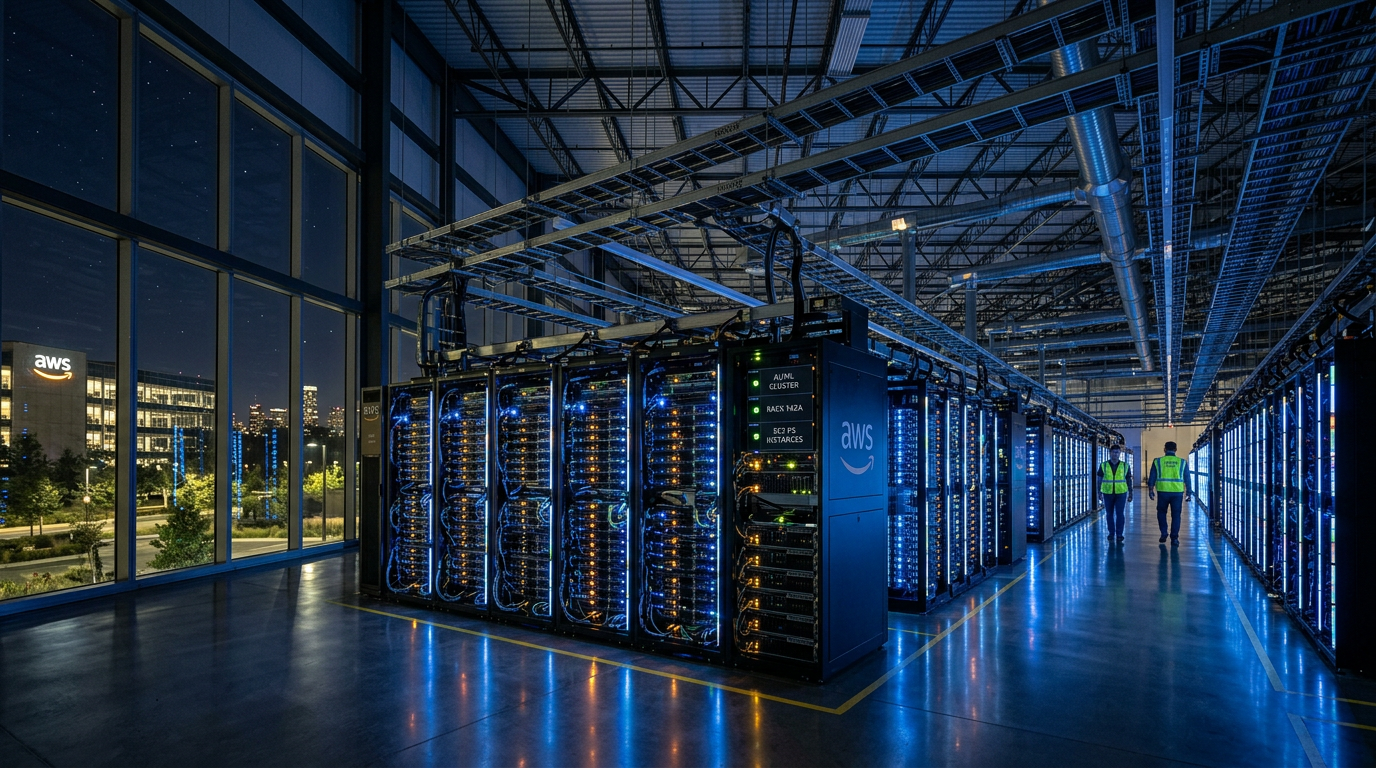
Amazon CEO Andy Jassy announced in his annual shareholder letter on April 9, 2026, that the company plans to increase Amazon AI capital expenditures to approximately $200 billion for the 2026 fiscal year. This aggressive investment strategy follows a surge in demand for generative AI services, with AWS reporting an AI revenue run rate exceeding $15 billion in the first quarter of 2026. Jassy defended the spending as a data-driven decision backed by significant customer commitments, including a landmark $100 billion agreement with OpenAI.
The projected $200 billion spend represents a substantial increase from the $131.8 billion recorded in 2025. According to the letter, this capital is primarily directed toward building the specialized infrastructure required to power large language models and generative AI applications. As reported by About Amazon, Jassy emphasized that the growth of AWS’s AI business is occurring 260 times faster than the original cloud business did during its initial expansion phase.
Strategic Rationale for Amazon AI Capital Expenditures
A core component of the strategy behind Amazon AI capital expenditures involves its custom silicon division. Jassy revealed that the company’s proprietary chips—including Graviton, Trainium, and Nitro—now generate an annual revenue run rate exceeding $20 billion. By developing internal hardware, Amazon aims to offer better price-performance ratios for AI workloads compared to general-purpose GPUs. The $100 billion commitment from OpenAI further underscores the scale of infrastructure demand Amazon is racing to meet.
However, the massive scale of Amazon AI capital expenditures has impacted the company's short-term financials. Amazon's free cash flow decreased from $38 billion to $11 billion as of early 2026, a shift Jassy described as a necessary trade-off for long-term leadership in the AI sector. He stated that the investment is "not on a hunch" but is based on clear signals from enterprise customers and internal efficiency gains.
Beyond cloud infrastructure, the letter highlighted advancements in Amazon's logistics and satellite divisions. As reported by GeekWire, the company has deployed over one million robotic units across its fulfillment centers to optimize operations. Additionally, Project Leo, Amazon's satellite internet initiative, is scheduled for a commercial launch in mid-2026, further expanding the company's technological footprint.
While we strive for accuracy, bytevyte can make mistakes. Users are advised to verify all information independently. We accept no liability for errors or omissions.
AI-generated image.
Related Articles
✔Human Verified