
Anthropic Launches Persistent Memory to Enable Long-Term Learning for Claude Agents
Anthropic introduces Claude persistent memory, allowing AI agents to retain context across sessions and reducing first-pass errors by up to 97%.
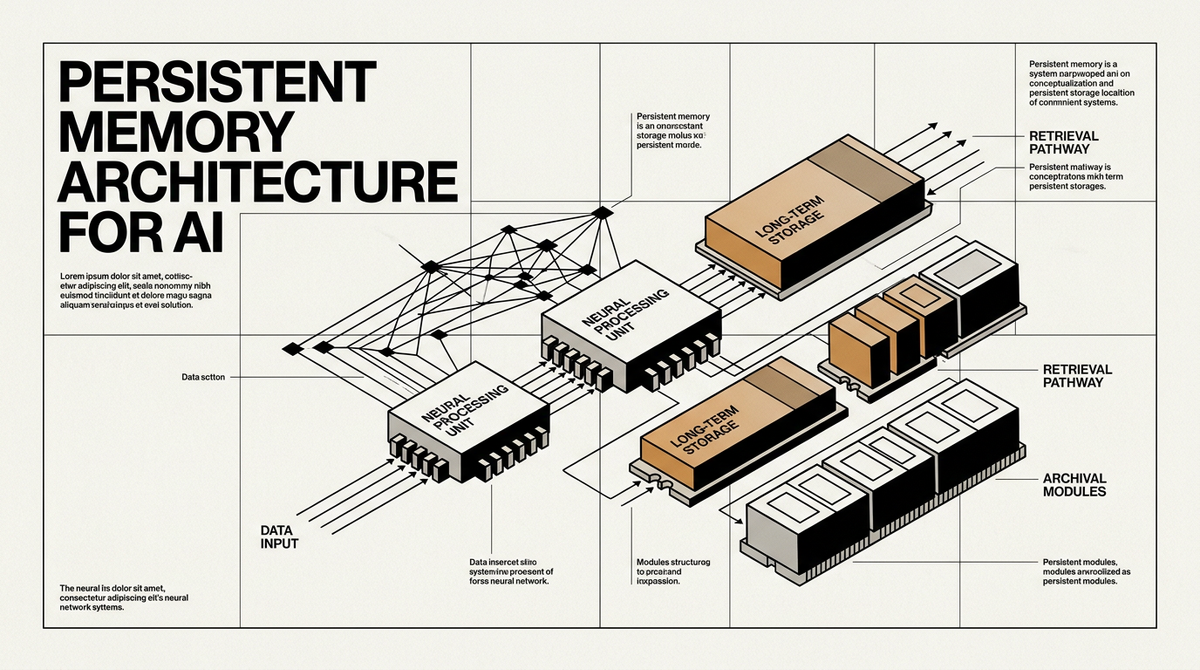
Anthropic has released Claude persistent memory, a new feature for its AI assistant that allows the model to retain context, user preferences, and project details across multiple interactions. The update includes a public beta of "Memory on Managed Agents" for developers, which utilizes filesystem-based storage to facilitate long-term learning and knowledge sharing between autonomous agents. This capability is designed to maintain continuity across web, desktop, and mobile applications, ensuring that the AI does not lose critical information between sessions.
The introduction of Claude persistent memory addresses a significant hurdle in agentic workflows: the loss of context between isolated sessions. By enabling agents to learn from past interactions, the system can reduce the need for repetitive prompting and extensive context window usage. Early testing data released by the company indicates that this feature can lead to a 97% reduction in first-pass errors, as agents leverage historical data to refine their outputs.
Strategic Impact of Claude Persistent Memory
For enterprise users on Team and Enterprise plans, the new memory system allows for a more personalized assistant experience. Users can view and manage the specific information Claude retains, providing a level of transparency over the model's internal knowledge base. To address privacy concerns, Anthropic also launched an "Incognito" mode, which prevents specific conversations from being stored in the persistent memory or used for future model training.
This rollout coincides with deeper integration between Anthropic and Amazon Web Services (AWS). The Claude Opus 4.7 model is now available on Amazon Bedrock, featuring a 1-million-token context window and a specialized "adaptive thinking" mode for complex reasoning tasks. Furthermore, the Managed Agent Harness within Bedrock AgentCore now allows developers to deploy these autonomous systems via simplified configurations.
The technical architecture of the memory feature relies on a filesystem-based storage system. This allows Claude persistent memory to function as a shared knowledge layer where multiple agents can access and contribute to a unified project history. As of April 27, 2026, these tools are being positioned as essential infrastructure for businesses looking to scale autonomous AI operations while controlling operational costs associated with token consumption.
While we strive for accuracy, bytevyte can make mistakes. Users are advised to verify all information independently. We accept no liability for errors or omissions.
AI-generated image.
Related Articles
- Claude Managed Agents Debut as Anthropic Hits $800B
- Anthropic Debuts Claude Opus 4.7 with Enhanced Reasoning and Visual Capabilities
- Anthropic Launches Claude for Word Beta for Legal Work
✔Human Verified