
Moonshot AI Pre-IPO Valuation Hits $50B Target in Back-to-Back Fundraising Before Hong Kong Listing
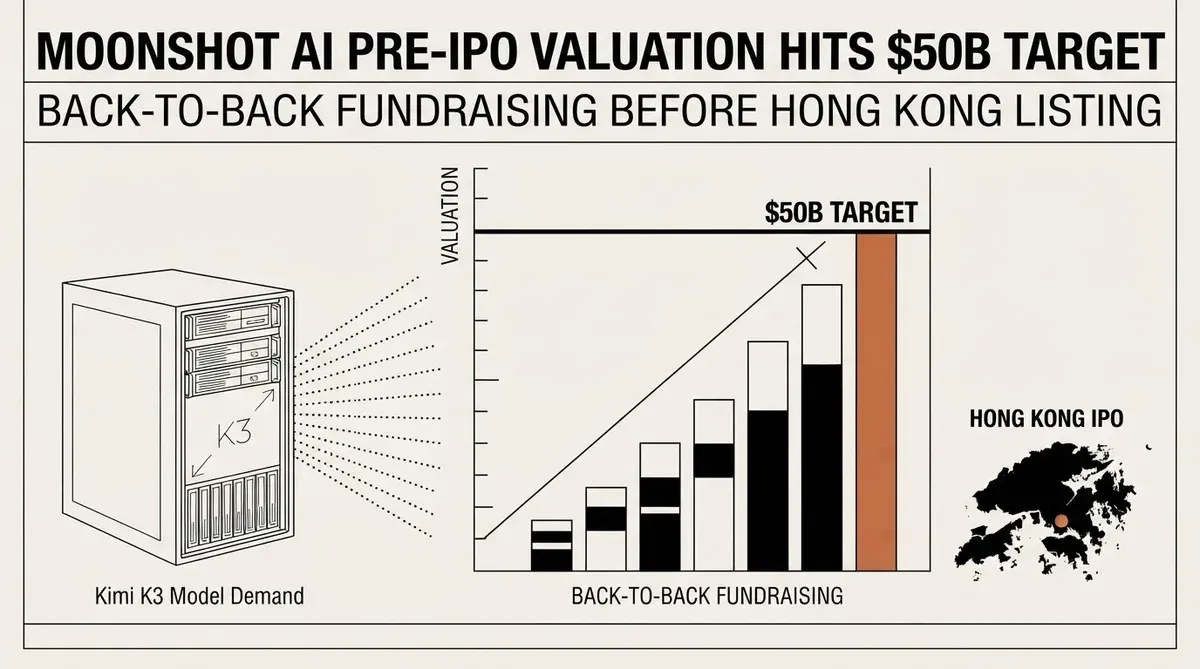
Moonshot AI is targeting a Moonshot AI pre-IPO valuation of up to $50 billion as it prepares a final fundraising round in August, capitalizing on surging demand for its Kimi K3 model ahead of a planned Hong Kong listing. The Beijing-based startup behind the Kimi chatbot is closing a current financing round at roughly $31.5 billion in the coming days and plans to open discussions for a follow-on round at a significantly higher price almost immediately, according to people familiar with the matter.
The back-to-back financing structure is unusual even for a fast-growing AI company. Moonshot expects to finalize the $31.5 billion round shortly before pivoting to the next tranche. That second round, which could open as early as August, is intended as the company's last private capital infusion before it files for a public listing in Hong Kong. The company has sent an IPO proposal to investors and is actively dismantling its offshore red-chip structure to clear regulatory hurdles, reports indicate. China International Capital Corporation and Goldman Sachs are underwriting the offering, and a listing could arrive within six months or possibly before the end of the year.
Understanding the Moonshot AI Pre-IPO Valuation Trajectory
The valuation jump from $31.5 billion to $50 billion in a matter of weeks is steep, but it reflects the intensity of market enthusiasm around the startup's recent product momentum. The gap between the two rounds also lets Moonshot test demand at a lower anchor valuation before aiming higher, a pragmatic sequencing that reduces execution risk if market conditions shift.
For a Chinese AI lab that completed a funding round at roughly $30 billion just weeks ago, the climb toward $50 billion is a rapid escalation. By comparison, many Western AI companies at similar revenue stages trade at lower multiples, underscoring the premium investors are assigning to Moonshot's growth trajectory and the broader China AI narrative. The company's annualized recurring revenue reached roughly $200 million by April, and the Kimi K3 release has accelerated those growth rates further. At a $50 billion valuation, that revenue multiple would be among the highest in the AI sector globally, placing significant pressure on the startup to sustain its growth trajectory through and beyond the IPO.
The Kimi K3 Catalyst
The driving force behind the valuation surge is the Kimi K3 model, which observers have compared to a new breakthrough moment for Chinese artificial intelligence. The model has generated viral reception and driven such strong demand that Moonshot temporarily paused sign-ups. That scarcity dynamic strengthens the startup's negotiating position with prospective investors and creates a narrative of high demand that typically supports premium pricing in private markets.
Kimi K3 operates at a reported scale of 2.8 trillion parameters, placing it among the largest publicly known models globally, though exact architectural details remain undisclosed. What matters commercially is the model's ability to drive adoption. The viral reception has turned Kimi K3 into a product that validates Moonshot's technical capabilities in a market where Chinese AI labs compete intensely on model quality, inference speed, and user growth. The pause in sign-ups also hints at infrastructure constraints, a common challenge for Chinese AI labs facing restricted access to advanced GPUs due to US export controls.
The parallel with DeepSeek's earlier breakthrough is deliberate. DeepSeek's model release earlier in 2026 triggered a valuation reassessment across the entire Chinese AI sector, and Moonshot appears to be capturing that momentum at the optimal moment for its fundraising timeline. Both companies are now racing toward public listings, creating a competitive dynamic that benefits underwriters and early investors but raises questions about whether the market can absorb multiple Chinese AI IPOs in quick succession.
Hong Kong IPO and Regulatory Path
A Hong Kong listing offers Moonshot access to international capital while navigating China's restrictive cross-border data and AI regulations. The removal of the red-chip structure signals that Moonshot expects to clear Beijing's regulatory review process for overseas listings, a step that has delayed or derailed other Chinese AI companies. CICC and Goldman Sachs as underwriters give the offering institutional credibility, though the final valuation will depend on market conditions at the time of pricing.
A listing before year-end would place Moonshot among the first wave of Chinese AI companies to go public, alongside DeepSeek, as part of a broader Chinese AI IPO rush. Fortune has described this moment as a great Chinese AI IPO race, reflecting a convergence of market conditions, technical milestones, and regulatory windows that multiple Chinese labs are now racing to exploit. The timing is critical: investor appetite for AI stocks remains strong globally, but that sentiment could shift if broader tech markets cool or if geopolitical tensions escalate further.
Strategic Implications of the Two-Round Structure
The compressed timeline carries both advantages and risks. Closing one round and opening the next within days lets Moonshot maintain negotiating momentum with investors and avoid a funding gap that could slow compute infrastructure investments. The company needs capital urgently to fund training costs, GPU procurement, and talent acquisition in a market where access to advanced chips remains constrained by US export controls.
But the rapid sequencing also means the higher valuation will face scrutiny quickly. If broader market sentiment turns or regulatory approvals lag, the $50 billion target could prove harder to defend in a public offering where institutional investors demand evidence of durable revenue growth rather than model-driven hype. For investors considering the second round, the key question is whether Kimi K3's momentum can sustain the adoption rates needed to justify a Moonshot AI pre-IPO valuation at that level in a public market context. The company's existing backers appear confident enough to structure this compressed approach, but public market investors may apply a different standard when evaluating the same metrics.
Moonshot is also dismantling its offshore structures ahead of the listing, a move that addresses regulatory requirements from Chinese authorities who have tightened oversight of overseas IPOs since 2021. This restructuring suggests the company is confident in receiving the necessary approvals from Beijing, though the timeline remains subject to government discretion. Any delay in regulatory clearance could disrupt the carefully sequenced funding plan and force Moonshot to extend its private fundraising timeline beyond the intended pre-IPO window.
Why This Matters
Moonshot AI's compressed two-round strategy is a test case for how Chinese AI labs can transition from private funding to public markets under tightening regulatory and geopolitical constraints. The outcome will signal whether the current enthusiasm for Chinese foundation models translates into durable public-market valuations, or whether the gap between private hype and public scrutiny remains as wide as it has been for other high-flying AI companies globally. For decision-makers tracking the Chinese AI ecosystem, the Moonshot listing will be the clearest indicator yet of how regulators, investors, and the market value homegrown foundation models at scale.
AI-generated image.
Related Articles
- Moonshot AI IPO Push Turns Kimi K3 Capacity Crunch Into a Market Structure Test
- Kimi K3 valuation impact: $314B cut from AI pre-IPO estimates
- Chinese Startup Moonshot AI Seeks $30 Billion Valuation in Latest Funding Round
✔Human Verified
Researched and cross-referenced against primary sources by the Bytevyte editorial team.