
Nvidia Pitches Full-Stack Codesign as AI Memory Pressure Rises
Nvidia says AI memory pressure is rising as HBM supply tightens. Its full-stack codesign plan uses NVFP4, Dynamo and KV cache tiering to cut memory needs.
Listen
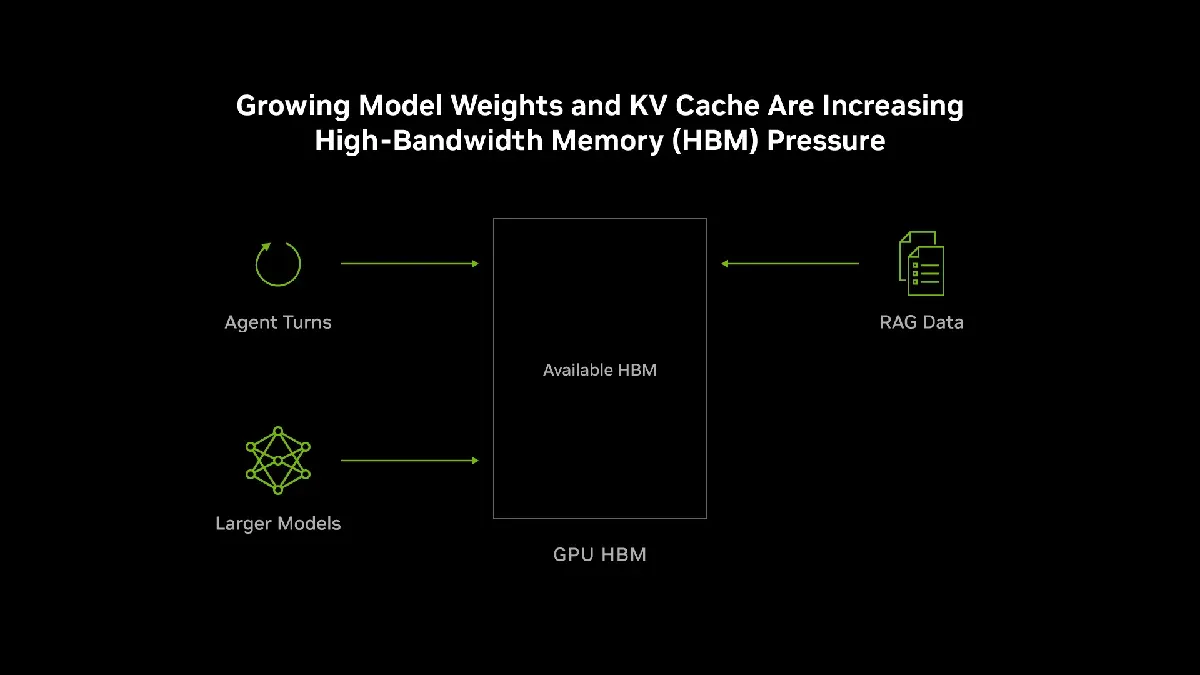
SANTA CLARA (BYTEVYTE) - Nvidia says AI memory pressure is rising as larger models, longer context windows and agentic applications draw on tighter supply and higher prices for memory. The company expects this squeeze to persist through the near term, and it has published a post describing a full-stack codesign approach across GPUs, CPUs, networking and software as its answer. The post is dated November 5, 2026.
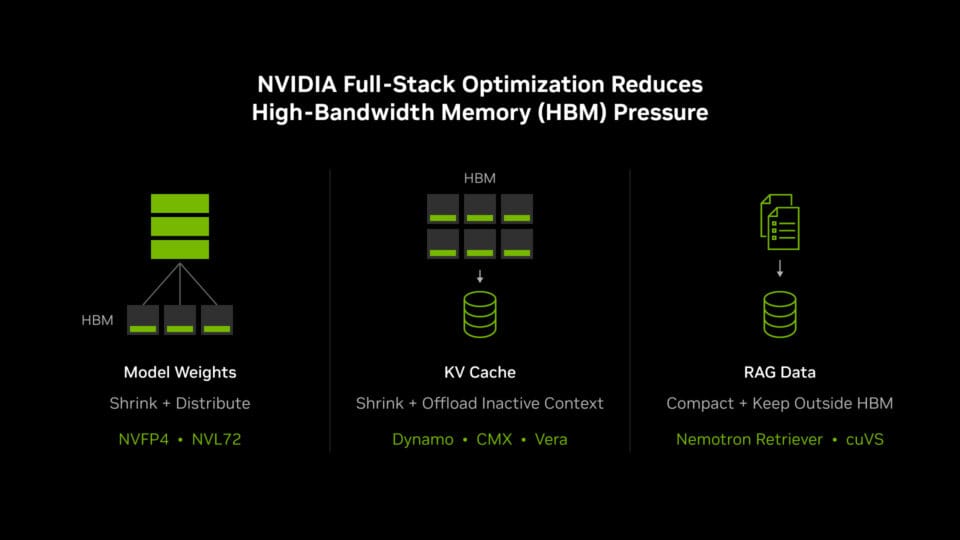
The core claim is that adding high-bandwidth memory alone no longer solves the problem. Nvidia says memory bandwidth becomes the bottleneck, so the company is working on efficiency at the format, cache and software layers. It introduces NVFP4, a number format that cuts the space needed for model weights and KV cache compared with FP8. Its Dynamo software manages KV cache across GPU, CPU and storage tiers, which lets inference workloads spill cache out of scarce GPU memory.
Where the AI memory pressure comes from
Nvidia says it was first to adopt HBM3e and HBM4 in an accelerated computing stack and works with memory partners to bring new memory technologies to market quickly. The company frames the supply problem as structural for the near term, not a cyclical blip. Agentic workloads are the sharpest driver, because they keep long contexts and intermediate state alive across many model calls.
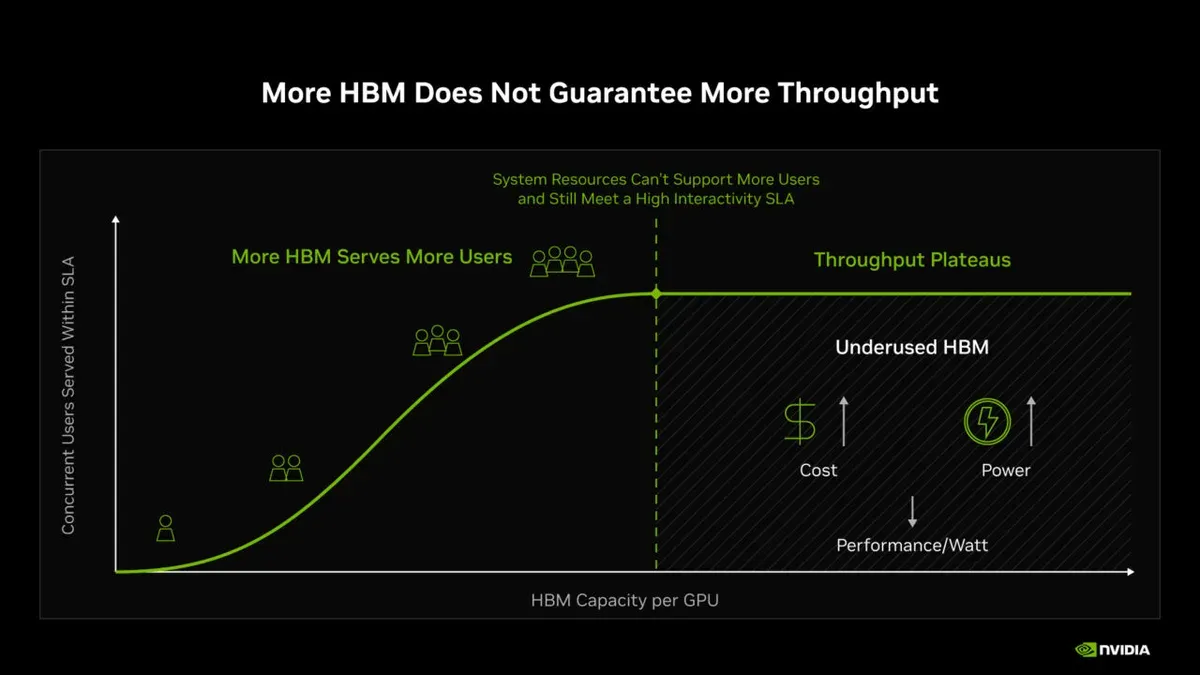
Vera Rubin NVL72 raises HBM capacity per GPU by only about 3% over GB300 NVL72, according to published coverage of the platform. If that figure holds, the platform gains come mainly from precision, cache management and interconnect design rather than from more memory per accelerator. Nvidia's own headline metric points the same way: the company claims 30x higher agentic throughput per dollar than previous generations on the SemiAnalysis AgentX benchmark.
Cost and supply: who gains and who pays
Memory suppliers are the clearest winners from tight HBM and DRAM supply, which strengthens the pricing power of Samsung and SK hynix. A price increase of more than 15% for AI servers has been reported, but Nvidia's post does not confirm that figure. TrendForce forecasts that demand for HBM and server memory will keep outpacing supply growth and that DRAM supply stays tight through 2027.
Legacy DRAM is also affected. As capacity shifts toward HBM, conventional DRAM runs short, which pushes its prices up for buyers outside the AI accelerator market. Cloud providers and enterprises that buy servers now face higher hardware costs, and the efficiency gains Nvidia describes only lower the cost per token if buyers actually run workloads on the newer stack.
Limits of the claims
The available material includes no independent verification of the 30x throughput-per-dollar figure, and it reports no accuracy results for NVFP4 compared with FP8. Those two gaps matter for procurement. A format that cuts memory use only helps if model quality holds on the target workload, and a benchmark-based cost claim only transfers to a production fleet if the mix of prompts resembles the benchmark.
The energy and water footprint of these deployments is also absent from the post. Memory efficiency lowers the hardware needed per unit of work, but the sources give no figure for total power draw, cooling water or on-site generation. Many new AI data centers run gas turbines that are loud for nearby residents, and gas-fired power carries high CO2 emissions. Cheaper inference per dollar can also speed up the build-out, so a lower cost per token does not automatically mean a smaller environmental load.
For a CTO, the practical takeaway is to ask vendors for memory configuration per accelerator, cache-tier design and the precision format used in any quoted throughput figure. Procurement teams should model server costs with the reported 15% price increase as a stress case until Nvidia confirms pricing. The next checkpoints are independent SemiAnalysis AgentX results and TrendForce's supply outlook for 2027, which will show whether the efficiency gains offset the rising cost of memory.
While we strive for accuracy and rigor, ByteVyte can make mistakes. Readers are advised to verify all information independently and conduct due diligence before making decisions based on this reporting. We accept no liability for errors, omissions, or decisions made in reliance on this content.
Sources
More Performance From Every Byte: How Full-Stack Codesign Solves AI's Memory Challenge
Related Articles
- Nvidia AI server price hike tops 15% as memory costs surge
- The Daily Brief: Nvidia's $164.5B Neocloud Guarantees Move AI Data Centers Risk Onto Its Books
- Nvidia Vera CPU Shipments Signal a Full-Stack Entry Into the Server Market
✔Human Verified
Researched and cross-referenced against primary sources by the Bytevyte editorial team. This article was generated with the assistance of artificial intelligence and reviewed by the Bytevyte editorial team.