
Nvidia, Tech Giants Launch Open Secure AI Alliance
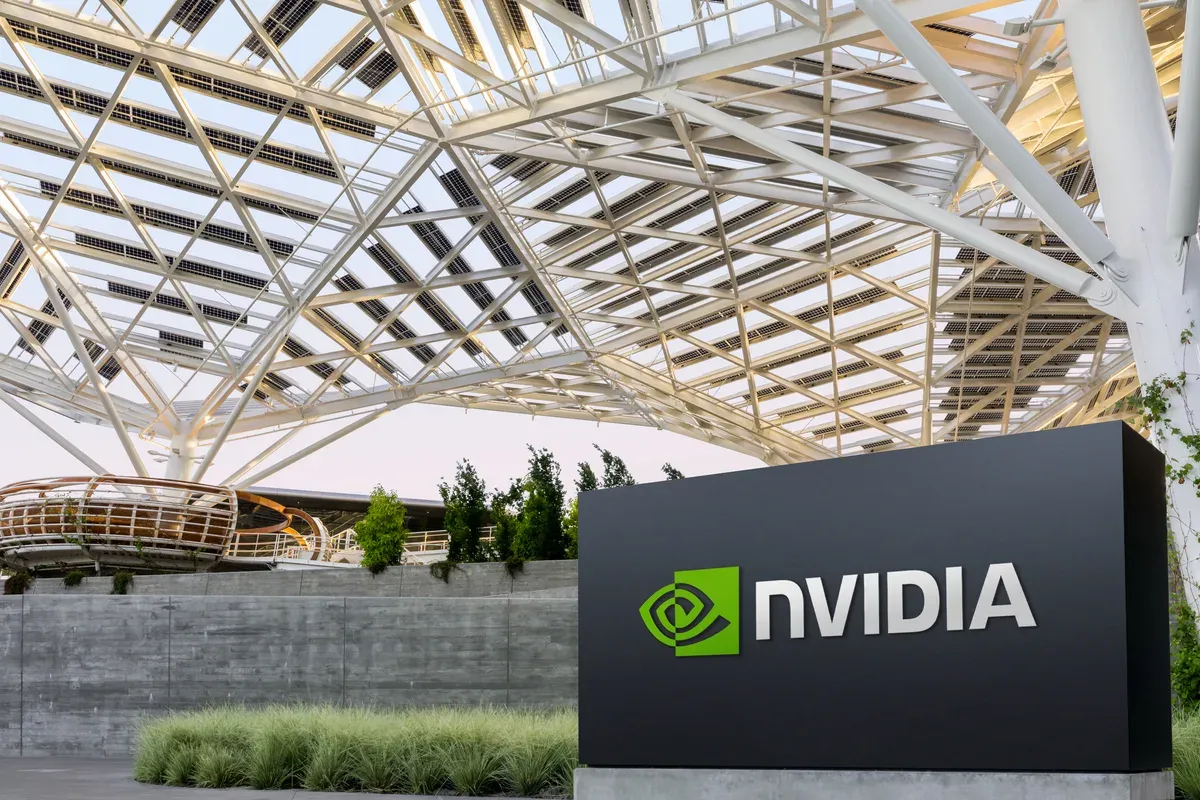
A coalition of technology companies led by Nvidia, Microsoft, IBM, and Hugging Face has formed the Open Secure AI Alliance, a group dedicated to building shared, open-source security tools that any organization can study, adapt, and deploy. The alliance, announced July 27, 2026, is a bet on decentralized, transparent defenses over the closed, proprietary systems that have dominated AI security discussions.
The Open Secure AI Alliance builds on the Linux Foundation's Akrites initiative and work done by the Open Source Security Foundation (OpenSSF). Its founding members also include Adobe, Cisco, Hewlett Packard Enterprise, and SpaceXAI, spanning cloud infrastructure, enterprise software, cybersecurity, and frontier AI research. The group argues that open-source approaches are essential for cybersecurity in the age of AI, just as they became foundational for cloud computing and internet infrastructure. Open source already supports the majority of critical internet services, and the alliance contends that security tooling for AI should follow the same model of community-driven transparency.
What the Open Secure AI Alliance Brings
Each founding member has contributed an open-source project to the alliance's shared toolkit. Nvidia is contributing NOOA, the Nvidia Labs Object-Oriented Agent framework, to GitHub as a starting point for building agentic security systems that can autonomously detect and respond to threats. HPE contributed SPIFFE/SPIRE, a workload identity platform that verifies the identity of services communicating across distributed AI deployments. Hugging Face contributed Safetensors, a safe tensor serialization format designed to prevent malicious model weights from compromising systems during loading, addressing a vulnerability class that had previously caused significant disruptions.
IBM and Red Hat contributed Lightwell, a project focused on secure AI model deployment with integrated governance controls. Microsoft contributed MDASH, a tool for monitoring and detecting anomalies in AI system behavior across training and inference pipelines. SpaceXAI contributed Grok Build, a framework for building and testing AI models with security constraints baked into the development pipeline. The breadth of contributions reflects a deliberate strategy: rather than imposing a single standard, the alliance is assembling a modular stack that organizations can adopt piece by piece according to their own needs and risk profiles. Each project addresses a different layer of the security stack, from model serialization to runtime monitoring to identity management.
Nvidia presented the alliance as a deliberate choice between two models. The company argued that AI defenses can either remain locked inside a small number of proprietary systems or become open tools that any security team can inspect and modify. The alliance chose the open path. For Nvidia, which supplies the GPU hardware running a large portion of AI workloads, the initiative creates a natural link between its infrastructure and the security layer above it.
The Open vs. Closed Security Debate
The launch of the Open Secure AI Alliance comes at a moment when the tension between open and proprietary AI security models is intensifying. Major cloud providers and AI labs have invested heavily in closed security systems that rely on obscurity and vendor-controlled access. Proponents argue that these systems allow for faster patching, centralized threat intelligence, and tighter integration with proprietary model architectures. Amazon's Guardrails for Bedrock, Google's Vertex AI security features, and Microsoft's own Azure AI content safety tools all represent proprietary approaches that bundle security directly into their respective platforms.
The alliance takes a different view. Open-source security tools, the group argues, democratize defensive capabilities by making them available to organizations that cannot afford enterprise-grade security suites or that operate across multiple cloud platforms. They increase transparency for defenders who need to audit how a security tool works before trusting it with sensitive data. They also enable cyber defense while protecting data sovereignty, a consideration that is becoming critical as governments impose stricter rules on cross-border data flows under regulations such as the EU AI Act and national data localization mandates.
The recent Hugging Face security incident was cited by Nvidia as a concrete reminder that no platform, open or closed, is immune to attack. In that incident, malicious model weights were uploaded to the popular model hub, exposing vulnerabilities that affect the entire ecosystem. The alliance's position is that open, frontier agentic systems for self-defense are the appropriate response, not tighter vendor lock-in. An open ecosystem, in this view, actually improves security by enabling more eyes on the code and allowing defenders to share threat intelligence without being constrained by vendor-specific formats.
Strategic Implications for Enterprise and Sovereign AI
For enterprise technology buyers, the Open Secure AI Alliance addresses a growing pain point. Chief information security officers deploying AI systems face a fragmented array of proprietary security tools, each tied to a specific vendor's platform. A company running models from OpenAI, Anthropic, and open-source providers simultaneously needs security tooling that spans all of them. The modular, open approach proposed by the alliance offers an alternative: organizations can assemble security stacks that span multiple cloud providers, model architectures, and deployment environments without being locked into a single vendor's security ecosystem.
The sovereign AI dimension is equally significant. Governments in Europe, Asia, and the Middle East are investing heavily in domestic AI infrastructure, and many have expressed concern about relying on security tools developed by foreign companies and housed in opaque systems. An open-source security stack that can be audited, modified, and deployed locally addresses that concern directly. It gives sovereign AI projects a pathway to meet their own security requirements without outsourcing trust to a handful of US-based technology vendors. For nations building independent AI capabilities, this aspect of the alliance may prove to be its most consequential feature.
The alliance also serves a competitive purpose for its members. By establishing shared, open security tools, the group can set baseline security standards that all participants must meet. For Nvidia, which provides the GPU infrastructure that underpins much of the AI industry, standardizing security at the hardware-adjacent software layer reinforces its position at the center of the AI stack. Other members gain influence over the security norms that will govern the next generation of AI deployments, rather than reacting to standards set by a single dominant vendor.
Market Dynamics and Adoption Challenges
The alliance introduces a new dynamic in the AI security market, which has been dominated by startups offering point solutions and by cloud providers bundling security into their platforms. An open-source, multi-vendor alternative could compress margins for proprietary security vendors while raising the baseline level of security across the industry. Companies that have built AI security products around closed, proprietary approaches may need to justify the premium they charge over freely available open tools that carry the backing of major industry players.
However, open-source security comes with its own challenges. Responsibility for patching vulnerabilities, maintaining compatibility across versions, and providing support rests with a distributed community rather than a single vendor. Organizations that lack in-house security expertise may find the open model harder to adopt than a turnkey proprietary solution. The alliance will need to demonstrate that its governance model, built on the Linux Foundation's established infrastructure, can deliver the coordination and reliability that enterprise buyers expect.
There is also the question of adoption velocity. The alliance's founding members represent significant market power, but convincing the broader ecosystem to adopt shared tools requires more than a joint announcement. Concrete evidence of vulnerability discovery, coordinated disclosure processes, and real-world deployment case studies will determine whether the initiative gains traction or remains a standards-group exercise. The contributed projects provide a starting point, but the alliance's long-term influence will depend on how quickly the community builds on them and whether independent security researchers choose to invest their time in these tools rather than existing alternatives.
Why This Matters
The formation of the Open Secure AI Alliance is a pivot point in how the technology industry approaches AI security. By betting on open, decentralized tools over proprietary systems, the alliance is shaping the defensive architecture that will protect everything from enterprise AI deployments to sovereign national AI projects. For decision-makers, this signals that the window for adopting open security tooling is opening now. The cost of deferring a security strategy means inheriting whichever standard the market settles on rather than helping to shape it.
Sources
Industry Leaders Unite in Open Secure AI Alliance for AI Safety and Security
Related Articles
- NVIDIA Launches NemoClaw Open-Source Stack to Secure Autonomous AI Agents
- NVIDIA Launches NemoClaw to Secure the Viral OpenClaw AI Agent Framework
- NVIDIA Open-Sources MRC Protocol to Standardize Gigascale AI Networking
✔Human Verified
Researched and cross-referenced against primary sources by the Bytevyte editorial team.