
Standard Chartered AI Integration to Cut 7,800 Corporate Roles by 2030
Standard Chartered AI integration will lead to 7,800 job cuts by 2030 as the bank pivots toward automation and efficiency in its corporate functions.
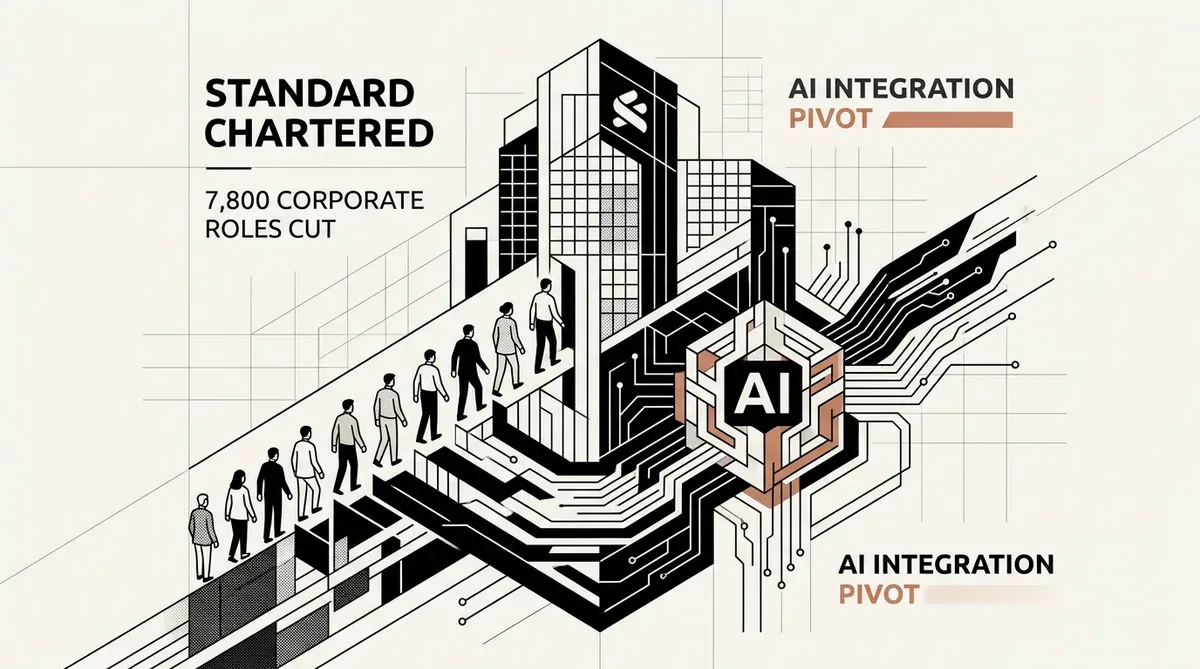
Standard Chartered plans to eliminate approximately 7,800 positions within its corporate functions by 2030. This reduction is part of a Standard Chartered AI integration strategy to automate back-office operations. The cuts represent 15% of the 52,000-person corporate workforce. The bank is focusing these changes on global hubs in Bangalore, Chennai, Kuala Lumpur, and Warsaw to create a more connected operating structure.
The Standard Chartered AI integration replaces manual tasks with automated systems. The bank is increasing technology capital spending while reducing human headcount in specific administrative sectors. This four-year plan simplifies internal processes and modernizes the global service delivery network. The bank expects the new model to respond faster to market shifts by removing legacy operational layers.
Regulatory and Internal Response to Standard Chartered AI Integration
Financial regulators in major markets are monitoring the transition. The Monetary Authority of Singapore (MAS) and the Hong Kong Monetary Authority (HKMA) requested data on how these cuts affect local labor markets and operational stability. Singaporean industry unions have asked the bank to prioritize reskilling current staff. These labor organizations expressed concern that automation is replacing traditional banking roles without sufficient transition support for the local workforce.
Internal tension followed comments from CEO Bill Winters during a Hong Kong investor briefing. Winters characterized the strategy as a shift from lower-value human labor toward technological solutions. After negative feedback from staff and the public, Winters apologized through LinkedIn and internal memos. He stated the reductions reflect changes in the nature of banking work and are not a comment on the personal value of employees. He said the bank is committed to supporting staff during the technological transition.
The Standard Chartered AI integration reflects a broader trend of efficiency-driven restructuring in global finance. By focusing on centers in Bengaluru and Warsaw, the bank is moving away from traditional offshore labor models toward centralized software architecture. This strategy aims to lower costs and improve competition against digital fintech firms. The bank is betting that future profitability depends on processing data with minimal human intervention.
Standard Chartered has not changed its strategic targets despite the controversy. The bank maintains that rapid technology adoption is necessary because manual processing is a liability in the current market. The bank must now balance these efficiency goals with regulatory requirements in multiple jurisdictions. The bank is currently working to prove that automated systems provide the same security and compliance levels as human-led processes.
While we strive for accuracy, bytevyte can make mistakes. Users are advised to verify all information independently. We accept no liability for errors or omissions.
AI-generated image.
Related Articles
- IBM Study: 76% of Global Firms Appoint a Chief AI Officer
- SAP Sustainability AI Agents Debut to Automate Corporate Compliance and ESG Workflows
- Meta AI Workforce Restructuring: 8,000 Layoffs as 7,000 Staff Pivot to Agentic Teams
✔Human Verified