
YouTube and Meta Deploy New Labels as Synthetic Influencers Proliferate
YouTube and Meta are deploying new labels to identify synthetic influencers as photorealistic AI content surges across social media platforms.
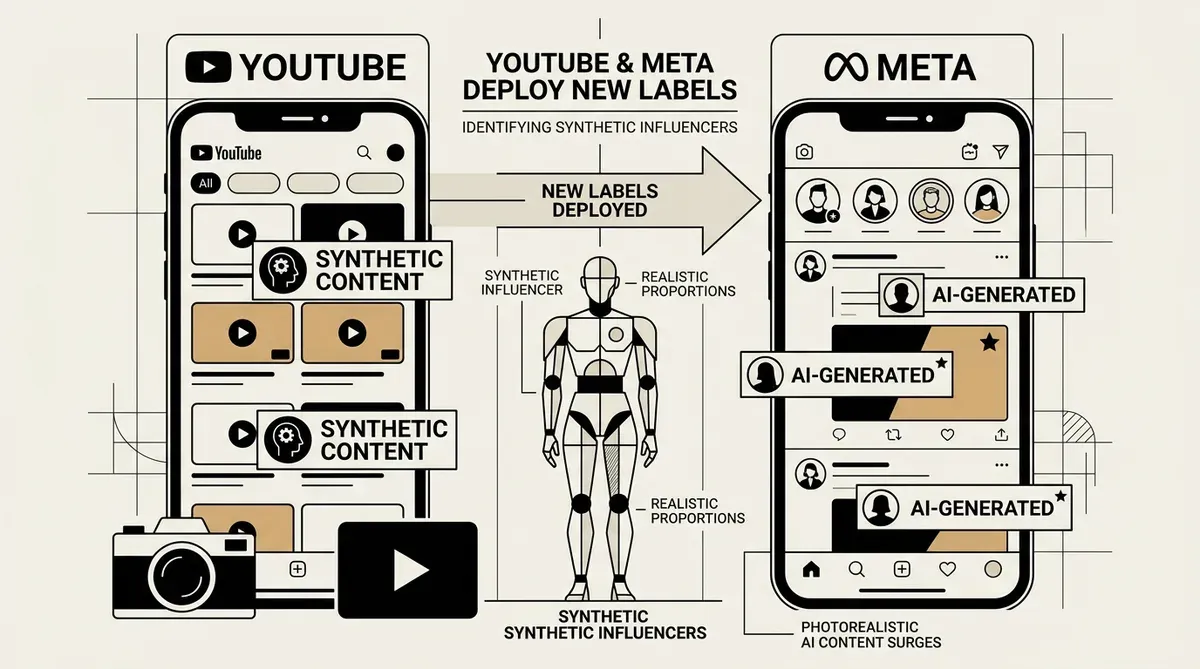
Synthetic influencers are flooding social media feeds at an unprecedented rate, making it increasingly difficult for users to distinguish between real people and AI-generated personas. As of June 8, 2026, the rapid advancement of photorealistic generation tools has created a surge of digital creators that bypass traditional detection methods, forcing major platforms to rethink their moderation strategies.
YouTube and Meta have responded by deploying automated systems designed to identify and label AI-generated content. These tools target photorealistic media in both long-form videos and short-form formats like YouTube Shorts. The goal is to provide transparency for viewers who may not realize they are interacting with a synthetic entity. However, the volume of new content is currently outpacing the ability of these platforms to perform manual reviews or maintain perfect accuracy in automated labeling.
How Platforms are Labeling Synthetic Influencers
The current strategy relies on a mix of user disclosure and algorithmic detection. Meta and YouTube now require creators to disclose when they use AI to create realistic depictions of people or events. When these disclosures are absent, the platforms use internal AI models to scan for digital artifacts that signal a synthetic origin. Once identified, a label is applied to the video or post to inform the audience that the media is digitally altered or entirely generated by AI.
For consumers, this means the "verified" checkmark or a high follower count no longer guarantees a human presence behind the screen. Synthetic influencers can now maintain consistent appearances, voices, and personalities across multiple platforms, often appearing more polished than their human counterparts. This shift has led to increased pressure on tech companies to ensure that transparency labels are prominent and difficult to circumvent.
The effectiveness of these transparency measures remains a key focus for social media companies as they refine their detection algorithms. While YouTube and Meta continue to roll out these updates, the technology used to create synthetic influencers continues to evolve, making the task of maintaining platform integrity a constant technical challenge. Future updates to these moderation tools are expected as the industry moves toward more standardized digital watermarking.
While we strive for accuracy, bytevyte can make mistakes. Users are advised to verify all information independently. We accept no liability for errors or omissions.
AI-generated image.
Related Articles
- YouTube Deploys Automated Labels for Photorealistic AI-Generated Content
- Meta Deploys New AI Age Assurance Tools to Identify Underage Users
- Meta Expands Instagram Parental Supervision with New Algorithm Transparency Tools
✔Human Verified