
Meta Smart Glasses Receive New AI-Powered Accessibility Features
Meta introduces AI-powered accessibility features for Ray-Ban smart glasses, including Be My Eyes integration and voice-activated tools for disabled users.
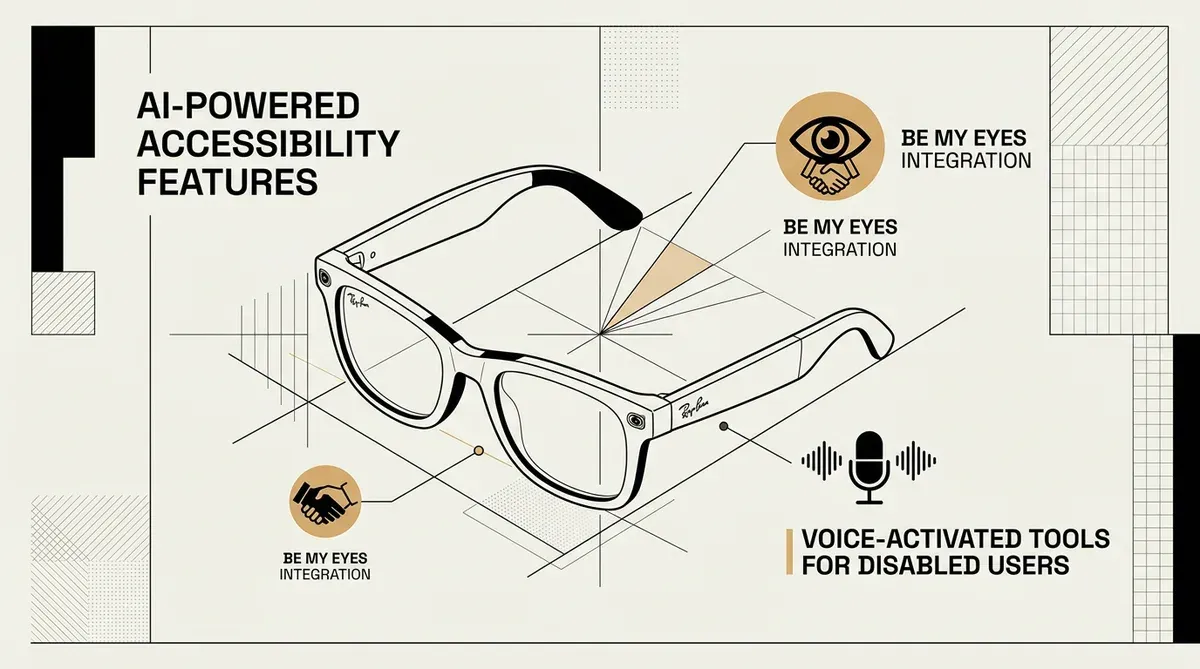
Meta has introduced a suite of AI-powered accessibility features for its smart glasses, designed to assist users with visual and physical disabilities. The update, arriving just before Global Accessibility Awareness Day, expands the utility of the Ray-Ban Meta smart glasses by integrating hands-free tools that reduce the need for smartphone interaction. These enhancements focus on real-time environmental awareness and improved communication for those with limited mobility or vision loss.
A central component of this rollout is a partnership with Be My Eyes, a platform that connects blind and low-vision individuals with sighted volunteers. Through the smart glasses, users can now initiate hands-free video calls to trusted contacts or volunteers who can provide visual assistance in real time. This integration allows the glasses to act as a remote set of eyes, helping users move through unfamiliar spaces or identify objects without holding a mobile device.
New Voice Commands and AI-Powered Accessibility Features
The AI-powered accessibility features also include expanded capabilities for the "Hey Meta" voice assistant. Users can now use voice commands to move through service directories or access specific information hands-free. For individuals with low vision, the glasses can read menus aloud or provide descriptions of their immediate surroundings, such as identifying landmarks or obstacles. These tools aim to provide a more independent experience for users in public spaces.
For users with physical disabilities, including quadriplegia, Meta has added voice-activated photo and video capture. This allows for the documentation of experiences and communication through media without requiring manual button presses on the frames. The system uses the onboard cameras and microphones to execute these tasks entirely through spoken prompts.
These updates are currently rolling out to users of the Ray-Ban Meta smart glasses. The company stated that these features are part of an ongoing effort to make wearable technology more inclusive. By leveraging on-device AI and cloud-based assistance, the glasses provide a specialized toolset for accessibility that extends beyond standard consumer functions.
While we strive for accuracy, bytevyte can make mistakes. Users are advised to verify all information independently. We accept no liability for errors or omissions.
Sources
Our AI Wearables Are “Changing the Game” for Disabled People
AI-generated image.
Related Articles
- Snap and Qualcomm Partner for AI-Powered AR Glasses Arriving in 2026
- Google I/O 2026 Preview: Gemini Spark AI Agent and Android XR Glasses Leaked
- Kenya and Huawei Launch AI for Disability Project to Scale Assistive Tech
✔Human Verified