
Meta teen safety ruling: $942M penalty plus redesign
A New Mexico judge ordered Meta to pay $942M and redesign teen safety on Instagram and Facebook. What the Meta teen safety ruling means for young users.
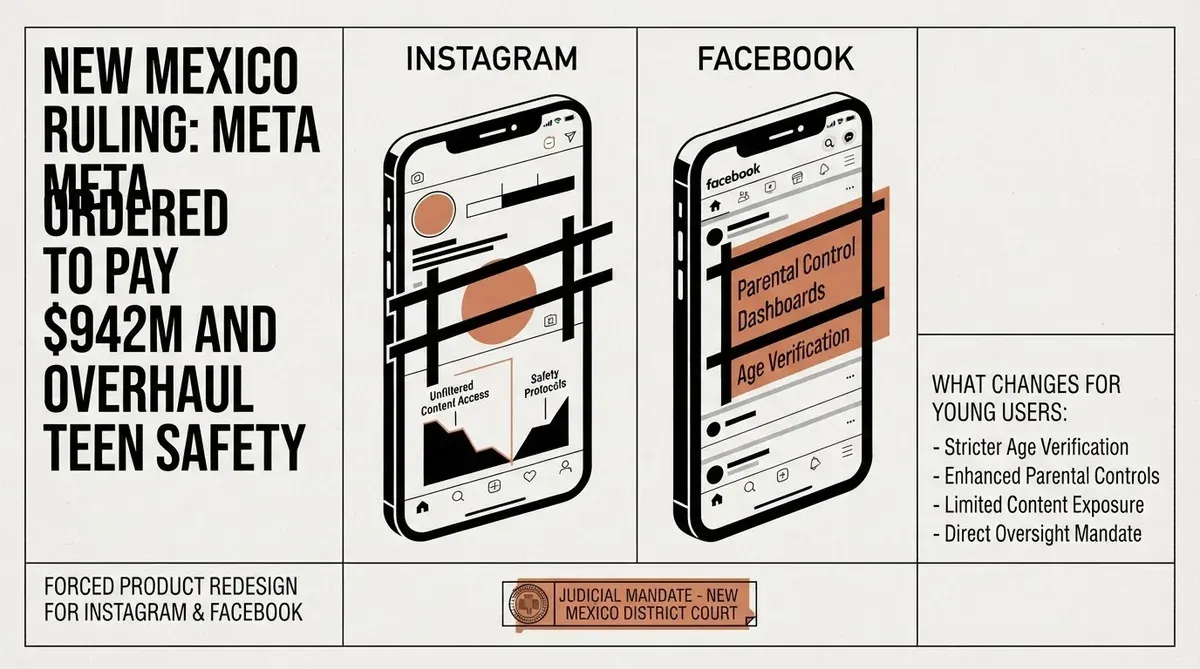
The Meta teen safety ruling out of New Mexico carries a $942 million price tag and, more unusually, a court-ordered redesign of how Facebook and Instagram behave for minors. Judge Bryan Biedscheid ruled Thursday in Santa Fe that the platforms amount to a "public nuisance" under state law. The ruling orders Meta to pay $567 million into a five-year abatement fund on top of the $375 million jury verdict from March.
Roughly $420 million of the new award funds youth mental health treatment services, according to the ruling, with the remainder going to awareness campaigns, prevention, screening and related costs over five years. The case stems from a 2023 lawsuit brought by New Mexico Attorney General Raúl Torrez. In March, a jury returned the first liability verdict against Meta for activity on its own platforms. Torrez framed the outcome as a win for parents worried about what social media is doing to their children.
The financial penalty is large, but the operational mandate in the Meta teen safety ruling is the more consequential half: this is the first time a US state has secured both money damages and mandatory platform changes from Meta over child safety.
What the Meta teen safety ruling changes for teens
The five-year decree covers users under 18 in New Mexico and reads like a product specification sheet. According to the court order, Meta must:
- cap combined Facebook and Instagram use at 90 hours per month, roughly three hours a day;
- block push notifications between 10pm and 7am, and between 8am and 3pm on school days;
- hide like counts by default for minors unless a parent or guardian opts in;
- prevent unconnected adults from messaging minors and keep teen accounts out of adult recommendations;
- default teen Instagram accounts to private and limit teen Facebook friends lists to other minors;
- tighten age verification, add AI chatbot safeguards, and display visible risk warnings.
The order also requires Meta to keep improving its age-assurance tools and expand its review of child sexual exploitation content on the platforms.
Why the redesign matters
The ruling converts a public nuisance finding into concrete product requirements, which sets it apart from a fine. Courts are effectively setting design defaults that Meta's product teams would otherwise control, turning liability law into a channel for platform regulation.
The order binds New Mexico only, and Meta has signaled it will appeal. That leaves the company weighing a state-by-state patchwork of rules against adopting similar protections nationwide on its own timeline. Meta already moved partway in June, expanding limits on teen feed content about topics such as nutrition and anxiety, its first major policy shift after the March liability finding.
The Meta teen safety ruling also arrives amid a broader run of cases against the company over how children use its apps, which raises the stakes for the appeal.
Why this matters
For families, the concrete effects are a phone that stays quiet at night, a feed without public like counts, and a hard monthly time cap. For Meta, platform design is now a legal obligation in at least one state, and the ruling hands other jurisdictions a tested template.
AI-generated image.
Related Articles
- Meta Implements 13+ Content Safety Settings Globally for Teen Users
- Meta Expands Instagram Parental Supervision with New Algorithm Transparency Tools
- Meta Deploys New AI Age Assurance Tools to Identify Underage Users
✔Human Verified
Researched and cross-referenced against primary sources by the Bytevyte editorial team. This article was generated with the assistance of artificial intelligence and reviewed by the Bytevyte editorial team.