
Samsung AI RAN Contracts Make It Korea's Anchor Vendor for Private 5G
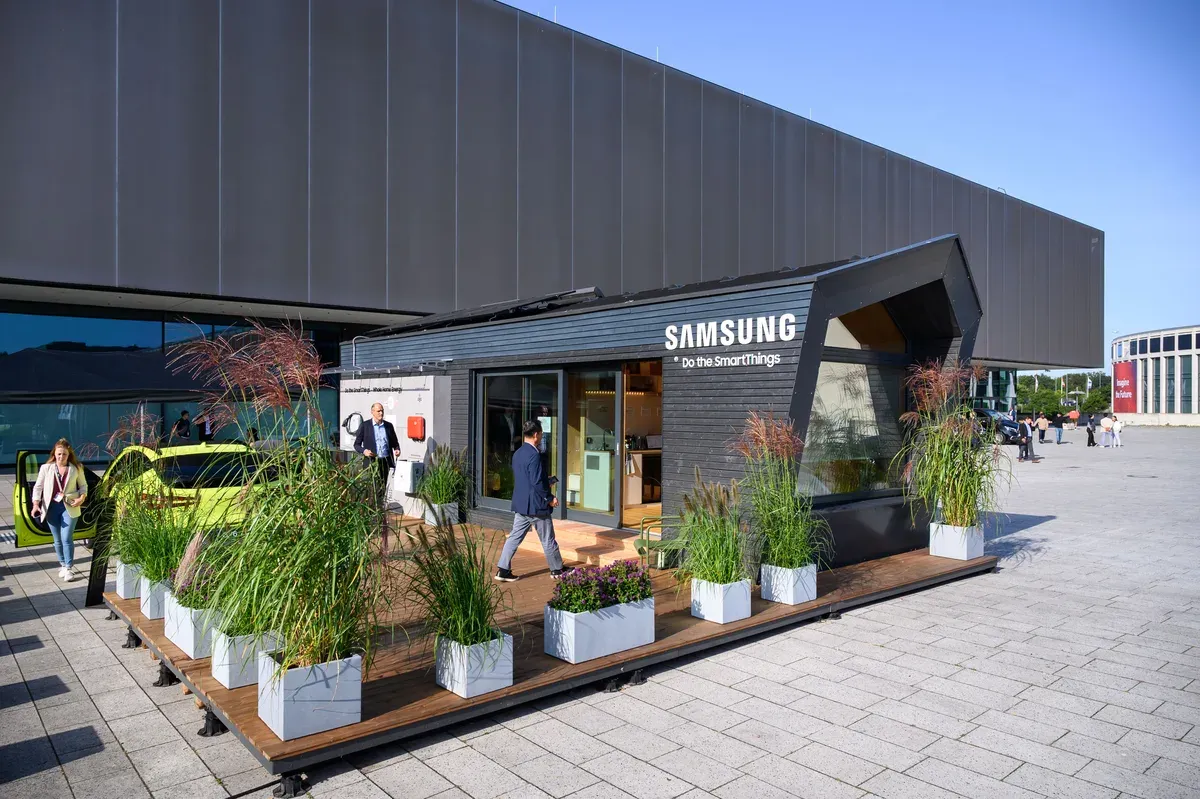
Samsung Electronics has secured the anchor role in South Korea's state-backed AI RAN program, signing contracts with KT and SK Telecom that make it the sole global vendor for KT and the main vendor for SK Telecom. The Samsung AI RAN deployments will run as 5G Standalone private networks inside industrial sites, among them shipyards and petrochemical plants. Work is scheduled to begin in October 2026.
The contracts sit under the Ministry of Science and ICT's Hyper AI Network initiative, which selected KT and SK Telecom as the executing organizations for its pilot phase. Each carrier leads its own consortium. Roughly 17.2 billion won is being invested across the two groups over two years, with network operators, equipment vendors and industrial partners working inside the same program. The stated purpose is to validate AI RAN and physical AI use cases before any transition to AI-native 6G.
What Samsung Is Putting on Site
Samsung's contribution spans the radio, the core network and an edge AI layer. The platform carrying the workload is Network in a Server (NIS), an integrated edge AI design that Samsung describes as the hardware base for the pilots.
The physical stack rests on Supermicro commercial off-the-shelf compact edge servers, powered by AMD EPYC 8004 Series CPUs. On that hardware, Samsung supplies its vRAN software, a 5G SA Core, the Wind River Cloud Platform and the CognitiV Network Operations Suite, which handles network operations.
Supermicro's off-the-shelf servers are a deliberate choice. Running AI RAN on standard compact edge hardware instead of proprietary baseband appliances keeps the deployment closer to a general-purpose data centre model, and it makes it simpler for an operator to run third-party AI workloads on the same boxes.
Bundling vRAN, a 5G core and network operations software into one edge server matters at these sites. Industrial plants rarely have spare data centre capacity next to the production line, so putting the network functions on a single compact server removes a dependency that would otherwise require a dedicated facility.
The use cases the consortia intend to validate are unusually specific for a telecom pilot: quadruped welding robots, autonomous patrol robots and real-time HD video monitoring. Each one asks things of a network that public infrastructure is not built to guarantee, including steady uplink capacity, low latency and predictable behaviour as a robot moves between radio cells. Private 5G SA exists because those guarantees are difficult to make on shared spectrum.
Samsung AI RAN: Exclusive at KT, Contested at SK Telecom
The two contracts are not symmetrical, and the difference carries the most information. KT has named Samsung its sole global vendor. SK Telecom has named Samsung its main vendor while continuing to evaluate equipment from rivals, including Ericsson, Nokia and HFR.
| Carrier | Samsung's role | Other named vendors | Timeline |
|---|---|---|---|
| KT | Sole global vendor | None named | Start October 2026 |
| SK Telecom | Main vendor | Ericsson, Nokia, HFR | Phase one 2026 to 2027; patrol robot trials in Incheon and Pangyo |
That structure shows what each carrier is buying. KT is procuring a working system: one vendor, one integration path, fewer interoperability questions to settle before October. SK Telecom is buying evidence. Putting four vendors on a single AI-RAN network lets it compare AI computing configurations and measure how well multi-vendor equipment interoperates, which is the question that decides whether AI RAN can be deployed at national scale.
The trade-off between the two approaches is speed against openness. KT's single-vendor route should reach a working system faster, with less integration risk before the October start. SK Telecom's multi-vendor route is slower and more expensive to run, but the interoperability data it produces is the part of this program that other operators cannot replicate on their own.
SK Telecom's separate work with Ericsson covers AI RAN and 6G research through 2031, split into phases, with the first running from 2026 into 2027 and including patrol robot trials in Incheon and Pangyo. Ericsson therefore holds a long-dated research position at the same carrier where Samsung holds the main supply position for this pilot. Nokia appears in SK Telecom's supplier list without a stated exclusive role.
Why the Multi-Vendor Test Is the Hard Part
AI RAN shifts part of the radio access workload onto general-purpose computing, which is what makes an x86 edge server with an AMD CPU a workable foundation. The catch is that performance depends on how the software divides that compute between real-time radio functions and AI inference.
A single-vendor deployment can absorb inefficiencies inside one integration stack. Four vendors on one network cannot. If SK Telecom's comparison turns up measurable differences in latency or resource efficiency, it becomes a procurement signal for operators well outside Korea, and a data point for the standards discussions that will define 6G.
The Korean carriers are not starting from zero. KT has worked with Samsung on AI RAN technology since 2023, analysing subscriber mobility patterns and radio conditions in real time, and the two companies have already validated AI-RAN operation on KT's commercial network. Samsung's claim that stable service holds across real-world conditions comes from that earlier commercial work, not from lab testing.
NIA director Kim Hyung-chul has framed the requirement around what industrial physical AI needs from a network: ultra-low latency, high reliability and large uplink capacity. That framing explains the site selection. A petrochemical plant or a shipyard brings metal structures, moving machinery and safety constraints that make coverage and interference harder to manage than in an office or a stadium.
Site selection reflects the workload as much as the technology. Welding robots and patrol robots operate where cabling is impractical and where a dropped connection stops work. Petrochemical plants and shipyards combine metal-heavy structures with strict safety rules, so the pilot tests coverage and reliability under conditions that a suburban macro network never faces.
The Money and the Timeline
The budget is modest next to a national 5G rollout. Roughly 17.2 billion won, or about $11.5 million, covers both consortia across two years, which buys test beds and integration labour rather than commercial coverage. The return Samsung is seeking is positional: a Samsung AI RAN stack validated on industrial sites, with named carrier references, in the run-up to the 6G specification cycle.
Samsung competes for AI RAN business against Ericsson and Nokia, both of which appear in SK Telecom's vendor list for this program. Winning exclusivity at one of Korea's two biggest mobile operators, plus the lead slot at the other, gives Samsung a domestic reference that its European rivals cannot match inside Korea.
Projects start in October 2026. Public demonstrations are planned for the 6G Festa in December 2026, giving the consortia roughly two months of operation before their first visible checkpoint.
Korea's interest in AI RAN reaches past domestic coverage. The country has treated AI-native network design as a route into the global 6G standards process, where vendors that can point to working multi-vendor deployments carry more weight than vendors that cannot.
Three checkpoints will show whether the pilots are producing more than press coverage. The 6G Festa demonstrations in December 2026 will show whether the robot workloads run on live private networks. SK Telecom's multi-vendor comparison will show whether AI RAN performance is consistent across suppliers. KT's exclusive arrangement will show whether a single vendor can carry an industrial deployment without a fallback.
Why this matters
For Samsung, the value of these contracts is less in the pilot revenue than in the reference. A sole-vendor role at KT and a main-vendor role at SK Telecom place its vRAN, core and network operations software inside the country's flagship AI network program at the moment 6G standards work is being shaped. For carriers elsewhere, the SK Telecom comparison is the piece worth watching, because it is one of the few structured multi-vendor AI RAN trials running on live industrial sites. If the Samsung AI RAN deployments hold up across suppliers, the case for private 5G in factories and ports gets easier to argue. If interoperability problems dominate, the timeline for AI-native 6G stretches.
Sources
Samsung at the Forefront of Korea's AI RAN Projects with KT and SK Telecom
Samsung at the Forefront of Korea's AI RAN Projects with KT and SK Telecom (press release)
Related Articles
- Sovereign AI Becomes a Budget Line as Samsung Runs Mistral Inside Its Fabs [Update]
- Samsung and LG Uplus Partner on ISAC Technology for 6G Infrastructure
- Samsung Mistral AI partnership: inside the on-premises fab AI deal
✔Human Verified
Researched and cross-referenced against primary sources by the Bytevyte editorial team. This article was generated with the assistance of artificial intelligence and reviewed by the Bytevyte editorial team.