
Shoplazza Unveils AI-native commerce OS to Automate Global Merchant Operations
Shoplazza launches the first AI-native commerce OS, using a multi-agent framework to automate retail operations for 650,000 global merchants.
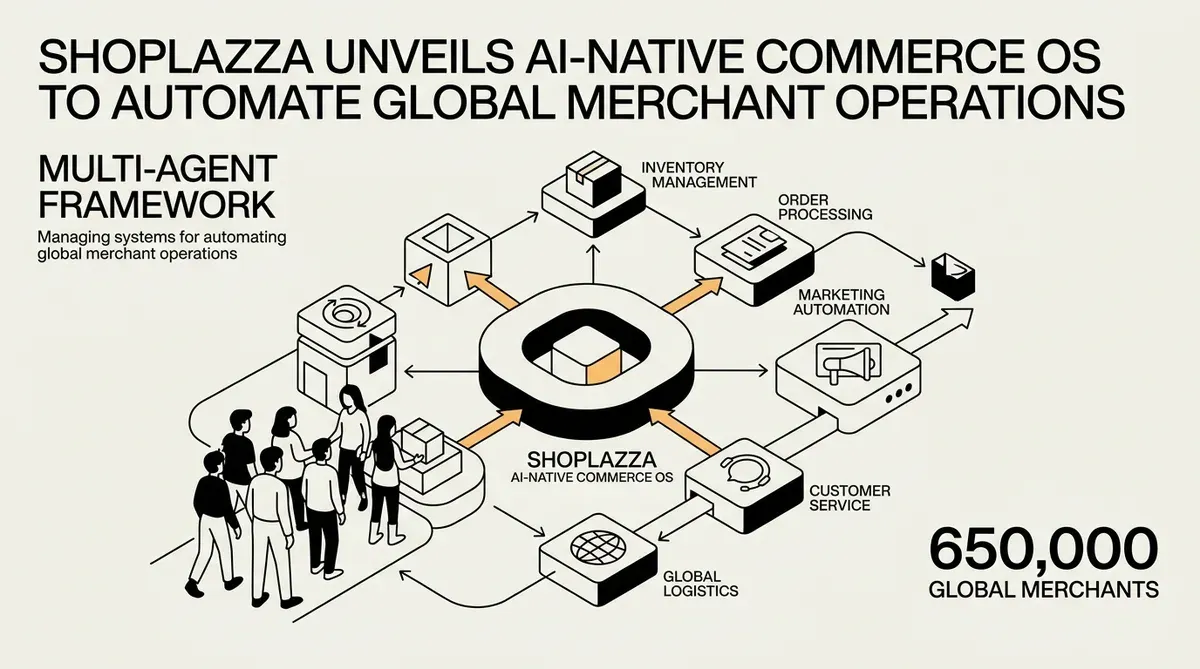
Shoplazza has introduced a new AI-native commerce OS, a platform designed to automate the entire lifecycle of digital retail through a multi-agent framework. This system, announced on May 15, 2026, moves away from traditional modular tools in favor of a unified environment where specialized AI agents handle complex merchant tasks. The platform is currently available to the company's global base of more than 650,000 merchants.
The core of the AI-native commerce OS is its ability to interpret merchant intent through natural language processing. Instead of manually configuring store settings or designing layouts, users can describe their goals, and the system generates the necessary structures and content. This shift toward intent-based commerce allows brands to scale operations without the proportional increase in administrative overhead typically required for global expansion.
Key Components of the AI-native commerce OS
The platform integrates several specialized tools that work in concert to manage different aspects of a retail business. Athena, an AI administrative assistant, is the primary interface for daily operations. It manages order processing and logistics through a conversational interface, reducing the need for manual data entry and monitoring.
For marketing and brand identity, the AI-native commerce OS includes LazzaStudio and AdValet. LazzaStudio is a creative asset generator that produces images and visual content tailored to specific products. AdValet complements this by automating advertising workflows and marketing campaigns, ensuring that promotional efforts are aligned with inventory levels and customer trends.
Strategic Impact on Merchant Automation
The launch of this system highlights a broader trend in the e-commerce sector toward autonomous operations. By consolidating store building, creative production, and logistics management into a single AI-driven environment, Shoplazza is positioning itself as a provider of infrastructure rather than just a software service. This approach addresses the fragmentation often found in retail tech stacks, where disparate tools frequently fail to communicate effectively.
For decision-makers, the deployment of an AI-native commerce OS suggests a future where the barrier to entry for cross-border trade is significantly lowered. The ability to generate localized content and automated store structures allows smaller brands to compete on a global scale. As of May 2026, the focus for the industry remains on how these autonomous agents handle the nuances of regional regulations and consumer preferences in diverse markets.
While we strive for accuracy, bytevyte can make mistakes. Users are advised to verify all information independently. We accept no liability for errors or omissions.
AI-generated image.
Related Articles
- BigCommerce and PayPal Launch AI-Powered Shopping Integration for Agentic Commerce
- Lenovo AI Library Debuts to Speed Up Enterprise Agentic AI Deployment
- HUMAIN and AWS Launch HUMAIN ONE to Automate Enterprise Workflows via Global AI Partnership
✔Human Verified