
Sony LYTIA 610 Sensor Could Redefine Telephoto Image Quality on Smartphones
Sony LYTIA 610 sensor introduces the industry-first RB2×2 OCL pixel structure, delivering 20% better spatial resolution and 4K 120fps video for smartphone cameras.
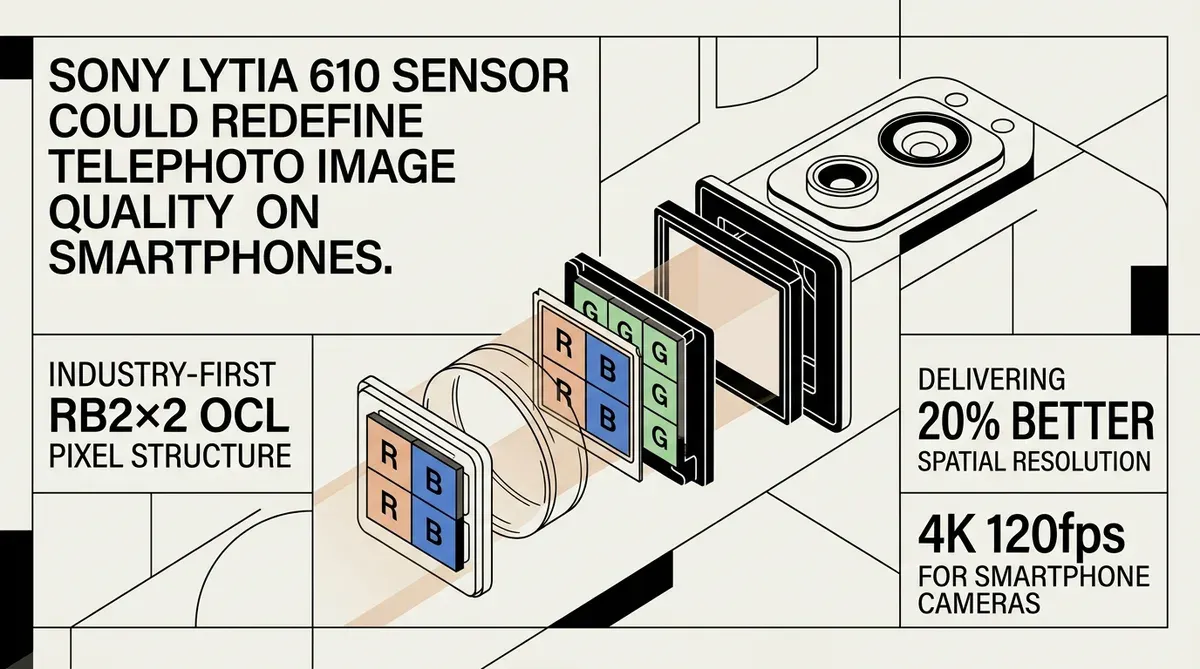
Sony Semiconductor Solutions has introduced the Sony LYTIA 610 sensor, a 1/2-type CMOS image sensor built around a pixel architecture that has never been mass-produced before. The sensor carries roughly 64 effective megapixels and is the first product to ship with an RB2×2 On Chip Lens (OCL) pixel structure. Mass production shipments are scheduled to begin at the end of June 2026.
The RB2×2 OCL design groups pixels under shared lens elements in a 2×2 arrangement, an approach that differs from conventional Bayer or Quad Bayer layouts. Sony paired this new pixel structure with a dedicated remosaicing algorithm that converts the raw array data back into full-resolution images. The combination yields a spatial resolution improvement of more than 20 percent compared to Sony's own sensors with identical pixel sizes, meaning telephoto camera modules using this sensor can preserve finer detail in distant subjects.
The LYTIA 610 is the first Sony 1/2-type sensor to support 4K video capture at 120 frames per second. Faster readout speeds on the stacked sensor make this possible without dropping into crop modes or reducing the field of view. For smartphone users, that translates into smooth slow-motion footage at 4K resolution from a physically small sensor that fits into thin phone bodies.
What the Sony LYTIA 610 Sensor Means for Smartphone Photography
The key implication of the new pixel structure is a narrowing of the image quality gap between telephoto and primary cameras. Telephoto modules on most smartphones use smaller sensors than the main wide-angle camera, which often leads to softer detail and noisier results in low light. By improving spatial resolution per pixel, the LYTIA 610 lets phone makers equip telephoto cameras with a sensor that comes closer to the performance of larger primary sensors without enlarging the camera bump.
The 0.7-micrometer pixel size positions this sensor for use in slim periscope or folded-lens telephoto assemblies, where physical space is at a premium. With 64 megapixels of resolution, the sensor also supports pixel-binning modes that merge adjacent pixels to improve low-light sensitivity, a technique commonly used on flagship smartphone cameras today.
Competing sensor manufacturers such as Samsung (ISOCELL) and Omnivision have introduced their own innovations in pixel architecture over the past several years, including dual-pixel autofocus and tetra-cell arrangements. The Sony LYTIA 610 sensor adds a distinct option for handset makers that prioritise both resolution and autofocus performance from a single sensor.
Availability and Outlook
Mass production shipments of the LYTIA 610 are slated to begin by the final days of June 2026. Smartphones carrying the sensor are unlikely to appear before the second half of 2026 or early 2027, given the usual lead time between sensor shipments and finished device assembly. Sony's LYTIA brand, launched in 2023, covers a range of mobile CMOS sensors aimed at the premium smartphone segment.
The introduction of the RB2×2 OCL pixel structure suggests that Sony is betting on optical innovation rather than simply scaling resolution or increasing pixel count to differentiate its sensor lineup. For consumers, the practical benefit should be sharper telephoto images and better 4K slow-motion video from future flagship phones, two areas where smartphone cameras still fall short of dedicated cameras.
AI-generated image.
Related Articles
- Motorola Unveils Edge 70 Series Featuring Dimensity 8500 Extreme and Advanced AI
- Sony Confirms May 13 Launch for Xperia 1 VIII Camera Redesign
- Sony Xperia 1 VIII Leak Points to Redesigned Camera and New AI Features
✔Human Verified
Researched and cross-referenced against primary sources by the Bytevyte editorial team.