
Tesla Plans $25B Tesla AI Capital Expenditure for 2026
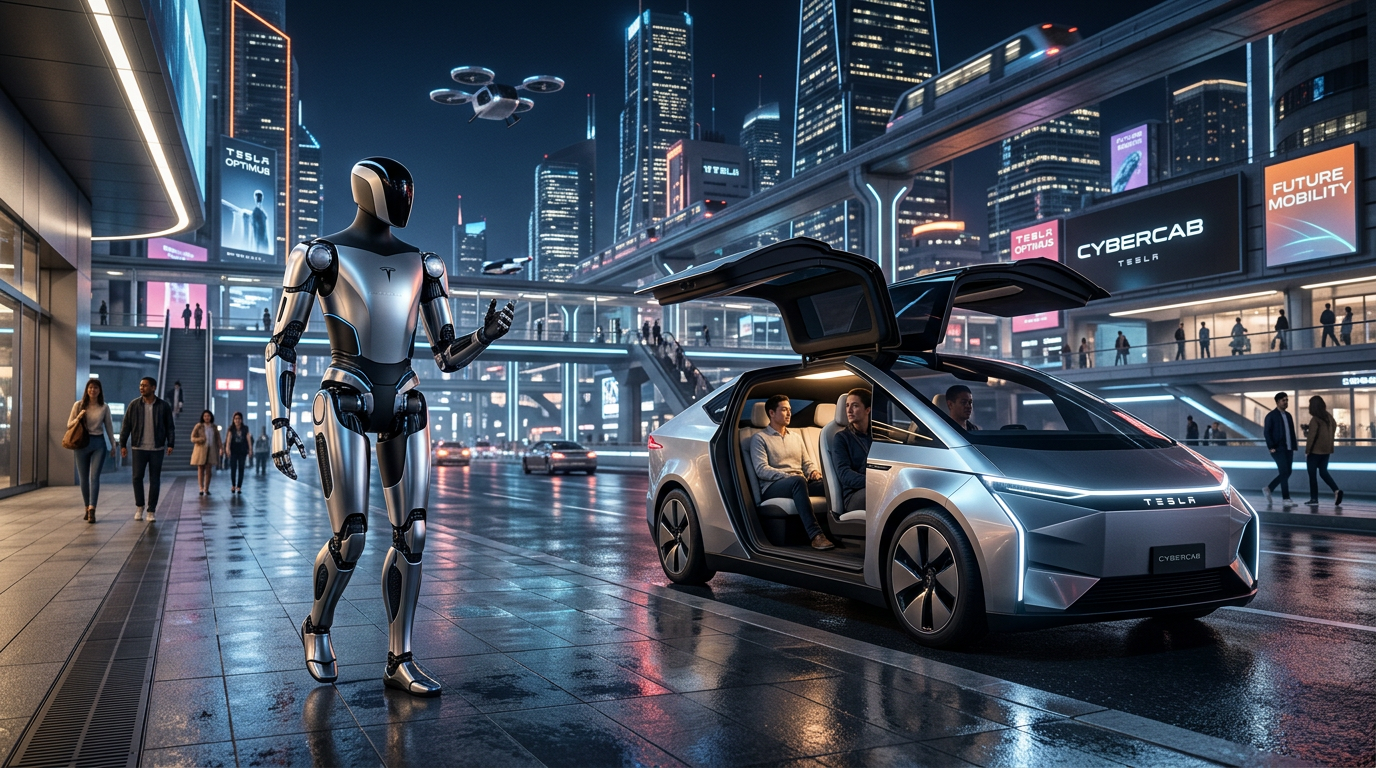
Tesla has increased its 2026 financial outlook, committing over $25 billion in Tesla AI capital expenditure. According to Tesla's Q1 2026 shareholder letter, the investment accelerates the company's transition into a robotics and artificial intelligence platform. The capital supports the Cortex 2 supercomputing cluster at Giga Texas and Optimus humanoid robot production lines in California.
Official Allocation of Tesla AI Capital Expenditure
Tesla's official financial filings indicate this budget is a threefold increase over previous cycles. The company's investment levels now align with major hyperscale technology firms. Per the Q1 2026 earnings report, the primary drivers include:
- Cybercab Production: Tesla is establishing volume manufacturing for the autonomous taxi, with production scheduled for late 2026.
- Optimus Deployment: The company is building assembly lines to support mass-market availability of the humanoid robot.
- Compute Expansion: Funding covers hardware and energy infrastructure for the Cortex 2 cluster to process AI training workloads.
Tesla reported a positive free cash flow of $1.44 billion for the first quarter of 2026. However, the company's official guidance warns that Tesla AI capital expenditure will likely result in negative free cash flow for the rest of the year. CFO Vaibhav Taneja stated during the earnings call that these investments are necessary for long-term dominance in autonomous systems despite near-term margin pressure.
Market Impact and Vertical Integration
The $25 billion commitment highlights the competition in physical AI. Tesla's strategy relies on vertical integration. This includes proprietary silicon, large-scale compute, and robotic hardware. CEO Elon Musk noted in the earnings call that this evolution is required to support next-generation autonomous products.
The investment serves as a benchmark for the autonomous robotics industry. Tesla's success depends on converting compute power into revenue-generating services by 2030. The company continues to navigate technical hurdles for the Cybercab and Optimus programs.
While we strive for accuracy, bytevyte can make mistakes. Users are advised to verify all information independently. We accept no liability for errors or omissions.
AI-generated image.
Related Articles
- Amazon Projects $200 Billion AI Infrastructure Spend as AWS AI Revenue Hits $15 Billion Run Rate
- Intel Surpasses $300 Billion Valuation and Confirms Intel Terafab Partnership
- Intel and Musk Unite for $25 Billion Terafab AI Chip Manufacturing Venture
✔Human Verified