
UK Under-16 Social Media Ban: Britain Moves to Bar Children From Social Platforms
The UK under-16 social media ban announced by PM Starmer requires age checks and targets gaming platforms in one of the world's toughest regulations.
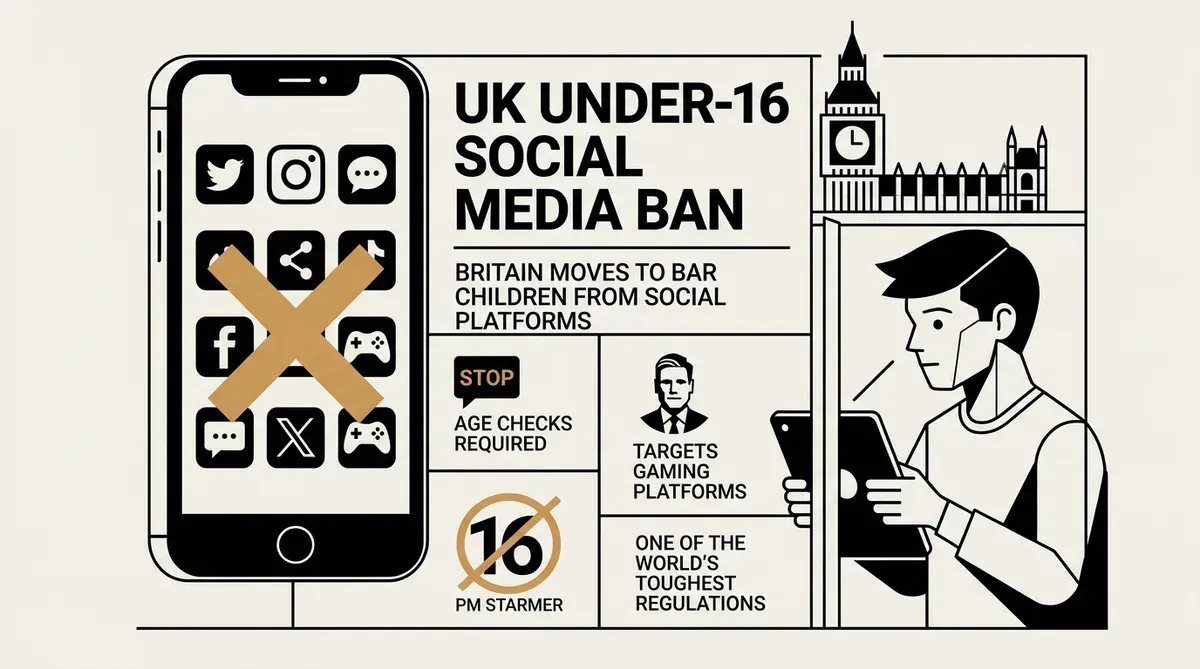
British Prime Minister Keir Starmer has announced plans to ban social media platforms for children under the age of 16, marking one of the strictest regulatory moves against tech companies worldwide. The legislation, unveiled this week, also targets gaming and livestreaming platforms with new restrictions aimed at shielding young users from online harms.
The policy follows a similar approach taken by Australia, which passed its own social media restrictions for minors last year. Under the UK proposal, technology companies will be required to deploy age verification systems to prevent under-16s from accessing their services. Platforms that fail to comply could face significant penalties under the new framework.
What the Ban Covers
The scope of the UK under-16 social media ban extends beyond traditional social networks to include gaming platforms where chat and social features are common, as well as livestreaming services popular with younger demographics. The precise list of affected platforms will be defined in the legislation, but the government has signaled it intends to target services where algorithmic content feeds and peer interaction are core features.
Starmer's government has positioned the measure as a response to growing evidence linking social media use to declining mental health among adolescents. The announcement follows years of debate in the UK about whether voluntary industry codes of conduct have been effective in protecting children online.
Age Verification Requirements
Central to the new rules is a mandate for strong age verification technology. Social media companies will need to implement systems that can reliably determine a user's age before granting access to their platforms. This requirement addresses a longstanding criticism of earlier regulatory attempts, which critics said lacked enforcement mechanisms strong enough to change company behavior.
The UK under-16 social media ban places the burden of compliance squarely on platform operators rather than parents or schools. Companies that host user-generated content and allow social interaction among minors will need to redesign parts of their service or restrict features for younger users.
Following Australia's Lead
The UK is the second major English-speaking market to pursue a blanket age restriction on social media, after Australia enacted similar legislation. The Australian model has been closely watched by regulators in Europe and North America, and the UK's move could accelerate similar proposals in other countries.
Tech industry groups have pushed back against such measures, arguing that blanket bans are less effective than age-appropriate design standards and better enforcement of existing terms of service. They have also raised concerns about the privacy implications of universal age verification systems, which could require all users to submit identity documents or biometric data.
What It Means for Families and Tech Companies
For parents in the UK, the legislation could remove much of the burden of monitoring children's social media use, shifting responsibility to the platforms themselves. For tech companies, the UK under-16 social media ban is a significant operational challenge, requiring engineering resources to build and maintain age verification systems across multiple services.
The legislation is expected to face parliamentary scrutiny in the coming months, with potential amendments before it becomes law. If passed, it would take effect after a transition period allowing companies to implement the necessary technical changes.
AI-generated image.
Related Articles
- Norway Plans to Raise Social Media Age Limit to 16 to Protect Minors
- Meta Implements 13+ Content Safety Settings Globally for Teen Users
- Meta Deploys New AI Age Assurance Tools to Identify Underage Users
✔Human Verified