
EU Tech Sovereignty Initiative Targets Independence from US and Asian Supply Chains
The EU tech sovereignty initiative aims to reduce reliance on US cloud and Asian chips with €110B in investments and new local manufacturing goals.
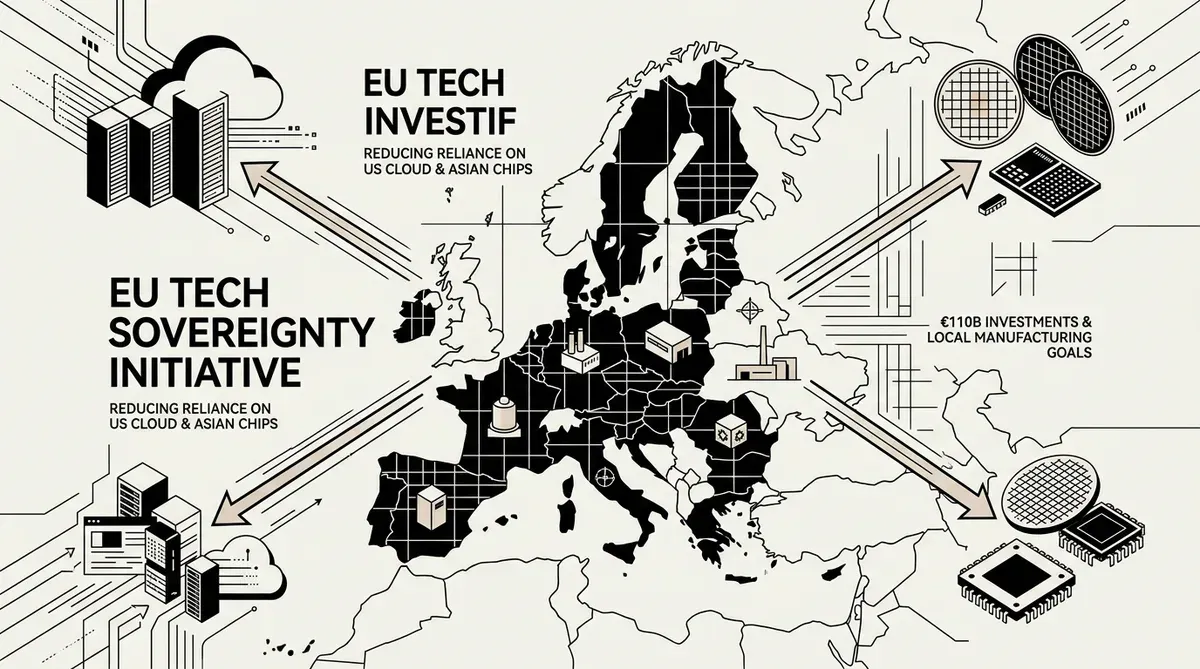
The European Union has launched a comprehensive tech sovereignty initiative designed to decrease its reliance on foreign digital infrastructure and hardware. This strategic move, announced this week, targets the dominance of United States cloud and artificial intelligence providers while simultaneously addressing vulnerabilities in Asian semiconductor supply chains. Brussels aims to build a more resilient and independent technology ecosystem within the region as global tensions and resource shortages continue to pressure the digital economy.
At the center of this plan is a dual-track approach focusing on local semiconductor manufacturing and the development of European cloud alternatives. The initiative responds directly to the growing energy demands of data centers and persistent chip shortages that have highlighted the risks of depending on external infrastructure. By supporting domestic production, the EU intends to secure the hardware necessary for the next generation of AI development and industrial automation.
Strategic Investments in the Tech Sovereignty Initiative
Individual member states are already moving to support these regional goals. France has secured commitments for over €110 billion in AI-related investments from major global firms. Companies including SoftBank and Salesforce are participating in this massive capital influx, which seeks to establish France as a primary hub for regional technology. These investments are expected to fund research facilities, data infrastructure, and specialized AI hardware development.
The tech sovereignty initiative also addresses the competitive pressure from Big Tech firms. European regulators view the current AI expansion as a significant power test, where control over compute resources and data storage translates directly into economic influence. By creating local alternatives to established US-based cloud services, the EU hopes to provide regional businesses with platforms that adhere strictly to European data standards and sovereignty requirements.
This shift toward independence comes as the EU reevaluates its position in the global supply chain. The focus on semiconductors is particularly critical, as the region seeks to capture a larger share of the high-end chip market currently dominated by Asian manufacturers. Securing these supply lines is a prerequisite for the EU's broader digital goals, ensuring that European industries have consistent access to the silicon required for advanced computing and automotive applications.
While we strive for accuracy, bytevyte can make mistakes. Users are advised to verify all information independently. We accept no liability for errors or omissions.
AI-generated image.
Related Articles
- AWS European Sovereign Cloud Launches in Germany via Vodafone Partnership
- UK Launches £500 Million Sovereign AI Fund to Scale Domestic Tech
- U.S. Senators Unveil Bipartisan Bill to Counter Chinese AI Exports with $500 Million Fund
✔Human Verified