
GPT-5.6 Release Restrictions Signal Tougher US AI Oversight
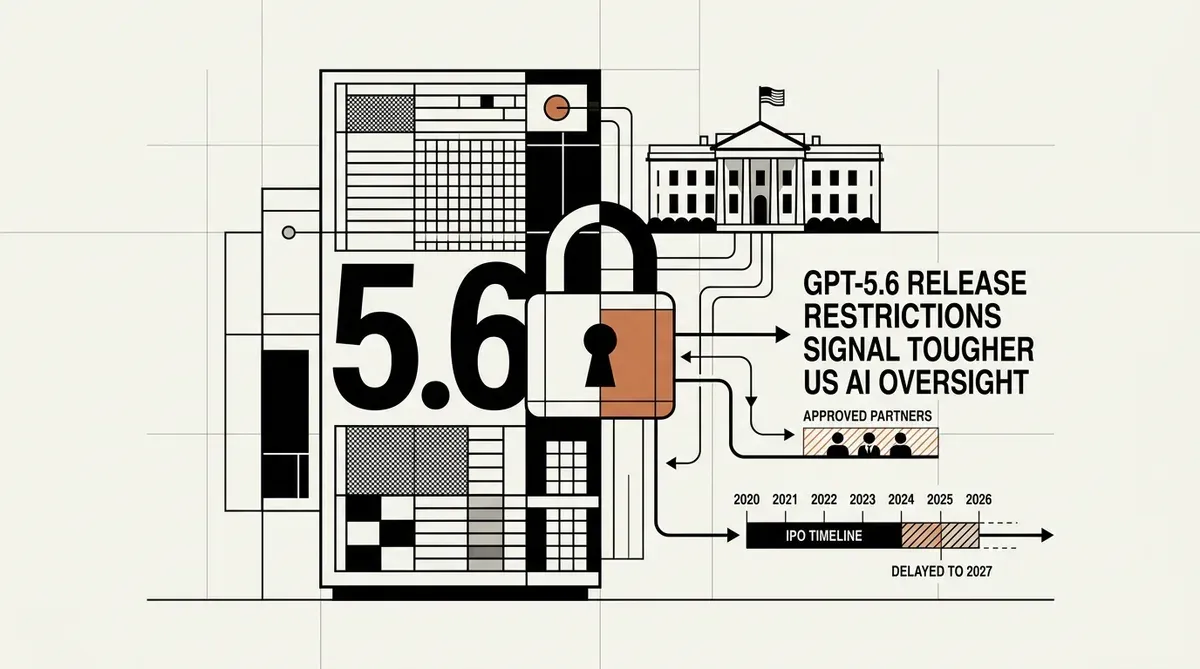
The Trump administration has asked OpenAI to restrict the release of its forthcoming GPT-5.6 model, limiting access to a small group of government-approved partners rather than launching it broadly. The request, confirmed by multiple sources including CNN, stems from cybersecurity concerns and the need for federal officials to evaluate advanced capabilities before wider deployment.
These GPT-5.6 release restrictions mark the first major test of the administration's new AI assessment framework. OpenAI CEO Sam Altman has informed staff that the launch will now transition to a limited preview period, with enterprise customers approved individually by the government. The move follows a June 2 executive order that established a voluntary 30-day assessment window for advanced AI models, giving regulators time to review potential risks before public release.
IPO Timeline Shifts
The GPT-5.6 release restrictions coincide with OpenAI adjusting its financial strategy. The company is reportedly pushing its IPO timeline from late 2026 to 2027, while maintaining a $1 trillion valuation target. Leadership, including Altman and CFO Sarah Friar, are prioritizing financial readiness and infrastructure commitments over a faster public listing. The delay suggests the company expects the regulatory review process to extend well beyond a single model release.
Broader Industry Context
OpenAI is not alone in facing this level of scrutiny. Anthropic has reportedly encountered similar government restrictions on its high-end models under export-control orders. The administration's approach signals a growing regulatory posture toward frontier AI systems, requiring companies to submit to government assessment before releasing advanced capabilities to the public. The November 2026 midterm elections are also a factor — tighter AI controls could serve as a political signal on national security.
For business leaders, the GPT-5.6 release restrictions carry direct operational stakes. Enterprise customers seeking early access will now need government approval to participate in the preview. Organizations already integrating OpenAI's models may face uncertainty around upgrade timelines and capability access. The shift also reinforces a trend toward tighter AI governance, where regulatory clearance becomes a prerequisite for deploying cutting-edge models in commercial settings. Companies building on OpenAI's platform should factor longer review cycles into their product roadmaps.
AI-generated image.
Related Articles
- U.S. Commerce Department Secures AI Safety Agreements with Google, Microsoft, and xAI
- Pentagon AI Contracts Awarded to Seven Tech Giants as Anthropic Faces Exclusion
- OpenAI AI Safety Framework Challenges White House Strategy
✔Human Verified
Researched and cross-referenced against primary sources by the Bytevyte editorial team.