
Neurovia AI Launches NeuroStream Video Compression to Cut 4K Storage Costs by 95%
Neurovia AI launches NeuroStream video compression, using bitmap vectorization to cut 4K video storage by 95% for autonomous driving and robotics infrastructure.
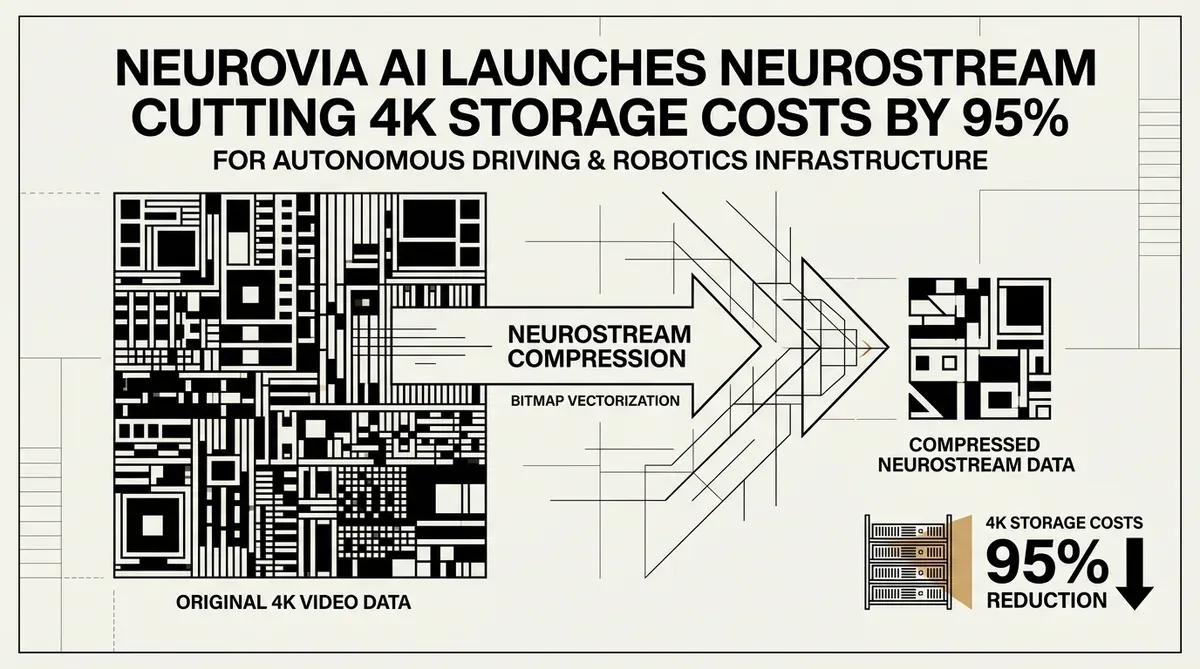
Neurovia AI has launched NeuroStream, a specialized data processing platform designed to handle the massive video requirements of the machine economy. The technology, released on May 14, 2026, utilizes a bitmap vectorization algorithm to reduce 4K video file sizes by 95% while preserving the visual fidelity required for machine learning applications. This release comes as global storage costs have reportedly increased fourfold over the last year, creating a significant bottleneck for companies deploying visual AI at scale.
The NeuroStream platform addresses the infrastructure needs of physical AI, such as autonomous vehicles and smart city sensors. In internal testing, the company demonstrated that a 5.5GB 4K video file at 60fps could be compressed to just 278MB. Unlike standard consumer compression, this method maintains the specific resolution and frame rate features that computer vision models rely on for accuracy. The NeuroStream video compression technology is optimized for edge deployment, allowing low-power sensors to process and transmit high-quality visual data without overwhelming local bandwidth.
Strategic Impact on AI Infrastructure
For decision-makers, the NeuroStream video compression system offers a potential solution to the rising costs of data retention and transmission. As a subsidiary of Robo.ai Inc., Neurovia AI has built the platform to be natively compatible with existing AI pipelines. This means that processed files remain in their original formats and do not require specialized decompression software to be read by machine learning models. This compatibility reduces the technical debt often associated with integrating new compression standards into established workflows.
The move toward high-fidelity, low-bandwidth data processing is a response to the increasing density of sensors in urban environments and industrial robotics. Neurovia AI CTO Mansoor Ali Khan has positioned the platform as a foundational layer for the machine economy, where autonomous systems must exchange vast amounts of visual information in real-time. By lowering the power and storage requirements for 4K video, the platform enables broader deployment of sophisticated AI in environments with limited hardware resources.
The launch of NeuroStream video compression signals a shift in focus from model training to the practicalities of long-term AI operations. With storage expenses climbing, the ability to maintain 95% efficiency without sacrificing model performance is a key metric for enterprise-scale robotics. Neurovia AI plans to continue its rollout of infrastructure tools as more industries transition toward autonomous physical operations throughout 2026.
While we strive for accuracy, bytevyte can make mistakes. Users are advised to verify all information independently. We accept no liability for errors or omissions.
AI-generated image.
Related Articles
- Robo.ai to Acquire Neurovia for $100 Million to Advance Physical AI Video Infrastructure
- NVIDIA Unveils Nemotron 3 Nano Omni to Streamline Multimodal AI Workflows
- Pony.ai Unveils L4 Autonomous Compute Platform with NVIDIA
✔Human Verified