
Samsung AI data center cooling gets $158M Gwangju plant
Samsung AI data center cooling gets a $158M FläktGroup line in Gwangju by 2028. Why the appliance giant's HVAC pivot is really an infrastructure play.
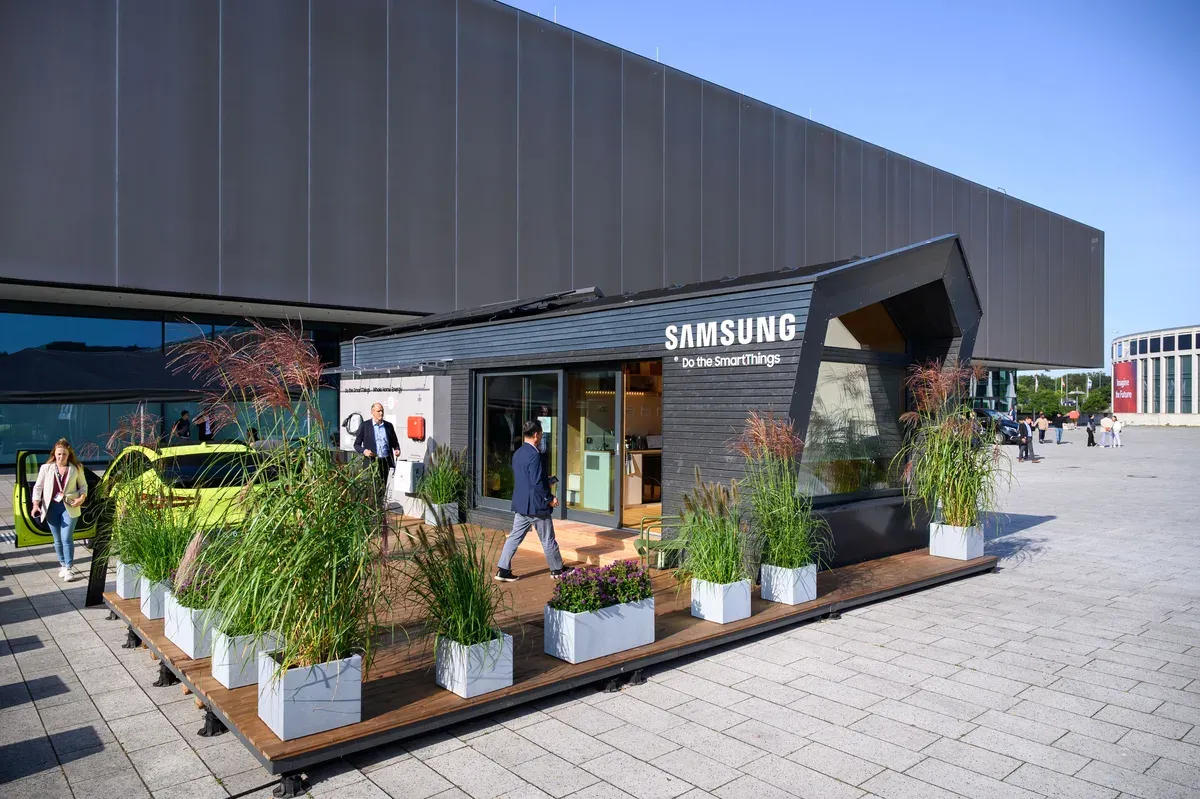
Samsung Electronics has committed about $158 million (KRW 240 billion) to build a FläktGroup HVAC production line at Gwangju Campus 3 in South Korea. The 21,800-square-meter facility is expected to start operations by 2028 and will be the company's 15th manufacturing site worldwide. The Gwangju line will produce FläktGroup HVAC equipment for the commercial market, with AI data center cooling a stated focus. Announced this week, the investment makes Samsung AI data center cooling a two-front operation alongside the FläktGroup plant Samsung opened in Pune, India on August 13, 2026.
FläktGroup is the European HVAC specialist Samsung acquired in November 2025. The company builds several classes of equipment. Air handling units, computer room air handlers, and fan wall units circulate conditioned air inside buildings; a separate critical-cooling line serves data centers and large commercial sites. That last category is the hardware a data center relies on when racks run hot. FläktGroup will use Gwangju as its Korean manufacturing site, adding a production foothold in Asia beyond the Pune site.
The stated ambition is to make Samsung a top-tier global HVAC company by 2030. The two plants are the concrete expression of that goal. Both are dedicated to FläktGroup products and kept separate from Samsung's home appliance lines. The separation is deliberate: Samsung is building dedicated industrial cooling capacity with its own brand, engineering, and sales channel, distinct from the refrigerators and air conditioners it sells to households.
The location choice is part of the strategy. The Gwangju line will sit inside Samsung's existing Gwangju Campus 3 operations site rather than on a greenfield plot, a detail that points to a faster build-out path toward the 2028 target. It also makes the new line the 15th facility Samsung operates worldwide, a milestone the company does not usually attach to side businesses.
What Samsung AI data center cooling is really about
I read this announcement as the moment Samsung's consumer appliance business starts acting like an AI-infrastructure supplier. A company that sells household cooling is now committing KRW 240 billion to factory space whose end customer is a data center operator. Samsung's own announcement names AI data centers as a primary demand driver for the line, which is a remarkable thing for a home appliance division to say out loud.
The strategic logic is easy to follow. Compute clusters generate heat that must be removed reliably, and cooling hardware has become a gating item in data center construction alongside power and networking. A supplier that can deliver thermal management at scale sells into a demand curve driven by the AI capital expenditure cycle rather than by retail seasons. Samsung AI data center cooling rests on a simple assumption: the companies building AI facilities will keep needing someone to remove the heat.
The sequencing backs the thesis. Samsung closed the FläktGroup acquisition in November 2025, opened the Pune plant in August 2026, and announced the Gwangju commitment this week. Three decisions inside roughly nine months is the cadence of a company that has made up its mind. The 2030 target gives the plan a shape: acquire and build in the first half of the decade, then scale and take share in the second.
The stakes for operators and competitors
For data center operators, the new capacity is a supply-side hedge. FläktGroup's critical cooling products sit inside the systems that keep server rooms within operating temperature, and a Korea plant shortens the supply chain for customers in Asia while giving buyers an additional source of supply from the same vendor family. More manufacturing capacity in more regions tends to mean shorter lead times and more room to negotiate on price, though Samsung has not disclosed pricing or margin expectations for the line, which leaves the economics of Samsung AI data center cooling unproven for now.
The skeptical case deserves a fair hearing. KRW 240 billion is real money, but it is small next to Samsung's group-wide capital spending, and 21,800 square meters of floor space is a single plant. One plant does not make a network. The 2030 ambition still requires taking share from established HVAC specialists in a market where track record and reference installations decide contracts. The Pune and Gwangju facilities are early proof points, and Samsung has said nothing about the sales pipeline attached to either site.
Even so, the direction is hard to argue with. Every announced facility converts the acquisition thesis into physical capacity, and physical capacity is what a data center construction boom actually consumes. Samsung's entry also raises the competitive pressure on existing thermal management suppliers, which now face a rival with global manufacturing scale and a household-name brand in a segment that was previously the domain of specialists. Set against the multi-billion-dollar capital programs in Samsung's semiconductor and display businesses, the HVAC outlay is a contained bet, which is exactly why it is easy to underestimate and hard to dismiss.
What to watch
For decision-makers, the near-term question is execution. The 2028 opening of the Gwangju line is the milestone that separates intent from delivery. Start dates, contract wins, and the revenue the division reports will tell whether the 2030 target is realistic. My read is that execution will decide the outcome; demand is not in question. Samsung AI data center cooling will be credible only if the plant opens on schedule and contracts follow. For buyers of AI compute, the practical move is to treat cooling supply as a strategic procurement item and track which vendors can back their roadmaps with dedicated factories. For investors, the number to follow is how much of Samsung's future capital spending lands in HVAC relative to semiconductors and displays.
There is also a reporting gap worth naming: Samsung has released few specifics on projected output, headcount, or customer commitments for Gwangju. The announcement describes floor area, campus location, and target markets; volumes and orders are undisclosed. Samsung has also not said which markets the Pune plant will serve or whether any anchor customers have signed on, and the same opacity applies to Gwangju. That restraint either means the business case is still being built or Samsung does not want to commit to numbers it may miss. Either way, the plan will be judged on the acquisition logic and the construction schedule alone.
Why this matters
The line between consumer hardware maker and AI infrastructure supplier is thinning, and Samsung's Gwangju investment is evidence of where that boundary is heading. Cooling is becoming as important to the AI build-out as the compute that generates the heat, and companies that can deliver it at scale are quietly becoming indispensable. Samsung AI data center cooling is the test case for whether the appliance division can become an infrastructure business. Watch the 2028 opening: if the plant starts on time and the contracts follow, the answer will be yes.
Sources
Samsung Electronics To Establish HVAC Production Line in Korea
Related Articles
- OpenAI's $750B AI Infrastructure Spending Plan Signals Shift from Cloud Tenant to Builder
- Google Initiates Construction of First Swedish Data Center to Support AI Growth
- South Korea Semiconductor Investment Hits $648B
✔Human Verified
Researched and cross-referenced against primary sources by the Bytevyte editorial team. This article was generated with the assistance of artificial intelligence and reviewed by the Bytevyte editorial team.