
Tesla Retires Model S and X to Scale Optimus Robot Production
Tesla ends Model S and Model X production at Fremont to focus on the Optimus robot, targeting 1 million units annually as it pivots to AI and robotics.
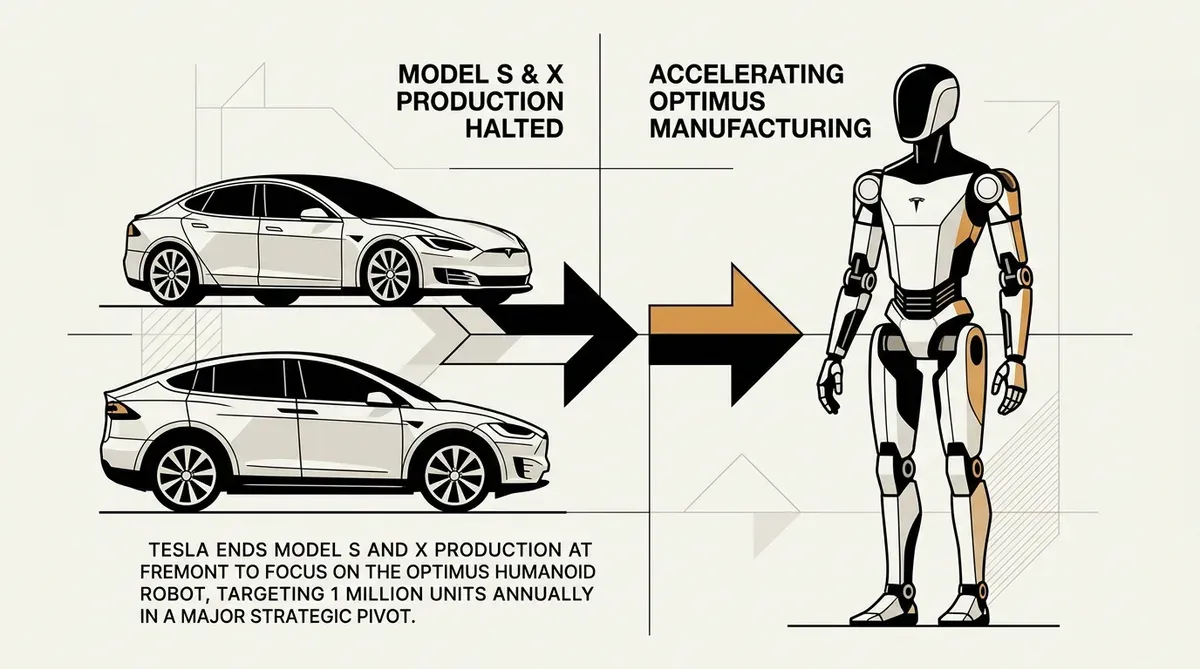
Tesla has stopped manufacturing its Model S and Model X vehicles at the Fremont facility. The company is reconfiguring these assembly lines to prioritize the Optimus robot. This change ends a 14-year production cycle for the Model S and an 11-year run for the Model X. On May 21, 2026, Elon Musk delivered the final 350 units. These vehicles are Grand Farewell editions with pomegranate red paint, gold badges, and employee signatures. Tesla first announced this plan in late 2025 to clear space for a robotics line capable of producing 1 million units every year.
The decision follows a shift in corporate strategy and changing regulatory demands. Lars Moravy, Tesla's Vice President of Vehicle Engineering, has explained that new global safety standards from Euro NCAP would require a total redesign of the existing vehicle platforms. Tesla chose to apply its engineering resources to the Optimus robot and the Cybercab platform instead of updating the older car architectures. This move reallocates the factory footprint to support the high-volume assembly of humanoid hardware.
Fremont Factory Transition to the Optimus Robot
Tesla is moving away from its origins as a traditional car manufacturer to become a robotics company. The Fremont plant is now the primary site for the Optimus robot assembly. This transition allows the company to focus on robotics as its main source of future value. The space once used for luxury cars is now dedicated to the mechanical and sensor integration required for humanoid units. While the Model S and X are currently discontinued, Moravy has suggested they could return if Tesla develops a new architecture that meets future market needs. For now, the company is prioritizing autonomous systems and robotic labor.
Market Shift and Robotics Strategy
The removal of the Model S and Model X creates a vacancy in the premium electric vehicle market. Competitors may gain market share in the high-end sedan and SUV sectors as Tesla exits these categories. Tesla is trading established vehicle revenue for a lead in the humanoid robotics industry. The success of this plan depends on reaching the 1 million unit annual production goal for the Optimus robot. Industry analysts are monitoring the Fremont facility as it replaces legacy vehicle hardware with AI-driven systems. By May 2026, the factory operations have shifted entirely to Tesla's next-generation product ecosystem.
While we strive for accuracy, bytevyte can make mistakes. Users are advised to verify all information independently. We accept no liability for errors or omissions.
AI-generated image.
Related Articles
- Tesla Plans $25B Tesla AI Capital Expenditure for 2026
- Tesla Cybercab Enters High-Volume Manufacturing at Gigafactory Texas
- Tesla Tailors FSD V14 Lite for Global Hardware 3 Vehicles
✔Human Verified