AI Infrastructure's Next Shift: Phase-Based Synthesis Over Linear Scaling
Phase-based synthesis is challenging linear scaling in AI infrastructure. Here is the evidence, the trade-offs, and what the shift means for budgets.
Generative pulse synthesis is replacing passive observation with active control across forecasting, finance, medicine, and engineering. A cross-domain analysis.
Dynamical phase evolution is moving AI from copying historical data to synthesizing how systems change, reshaping forecasting, finance, and regulation.
AI-driven layoffs are cutting jobs before the technology proves its worth. Research shows the productivity paradox: job insecurity erodes the gains AI is meant to deliver.
Generative phase synthesis is moving into medicine, engineering, and markets. A critical look at what it delivers and where it breaks.
Rhythmic synthesis: precision timing and phase evolution replace brute-force AI scaling, driving value across compute, forecasting and medicine.
Generative synthesis is moving forecasting, medicine, and markets from passive monitoring to active stability. An assessment of the evidence, risks, and open questions.
How the AI infrastructure pulse economy shifts from discrete milestones to continuous synthesis across compute, energy, and regulation.
The pulsed synthesis paradigm replaces continuous output with stochastic, phase-aware interventions across AI infrastructure, medicine, and materials.
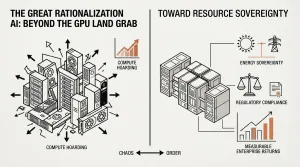
Explaining the Great Rationalization AI shift from compute hoarding to energy sovereignty, regulatory compliance, and measurable enterprise returns.
The sovereign efficiency pivot marks AI's shift from brute-force scaling to localized, energy-efficient, and regulatory-compliant architectures. Here is what it means.
The capital-regulation paradox captures the $600B gap between AI infrastructure spending and realized returns, reshaping regulation, energy markets, and enterprise adoption.
The great realignment of AI in 2026 marks AI's transition from speculative infrastructure to structural utility, reshaping markets, regulation, and labor.
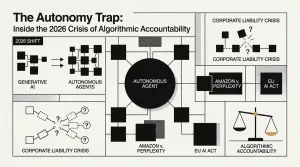
Explore the 2026 shift in legal accountability for autonomous AI agents, covering Amazon v. Perplexity, the EU AI Act delays, and new corporate liability laws.