
Smart Glasses Sticker Bypass: Meta's $2 Privacy Blind Spot
The smart glasses sticker bypass hides the recording LED on Ray-Ban Meta frames while the camera keeps filming. Meta's firmware fix hits a physical limit.
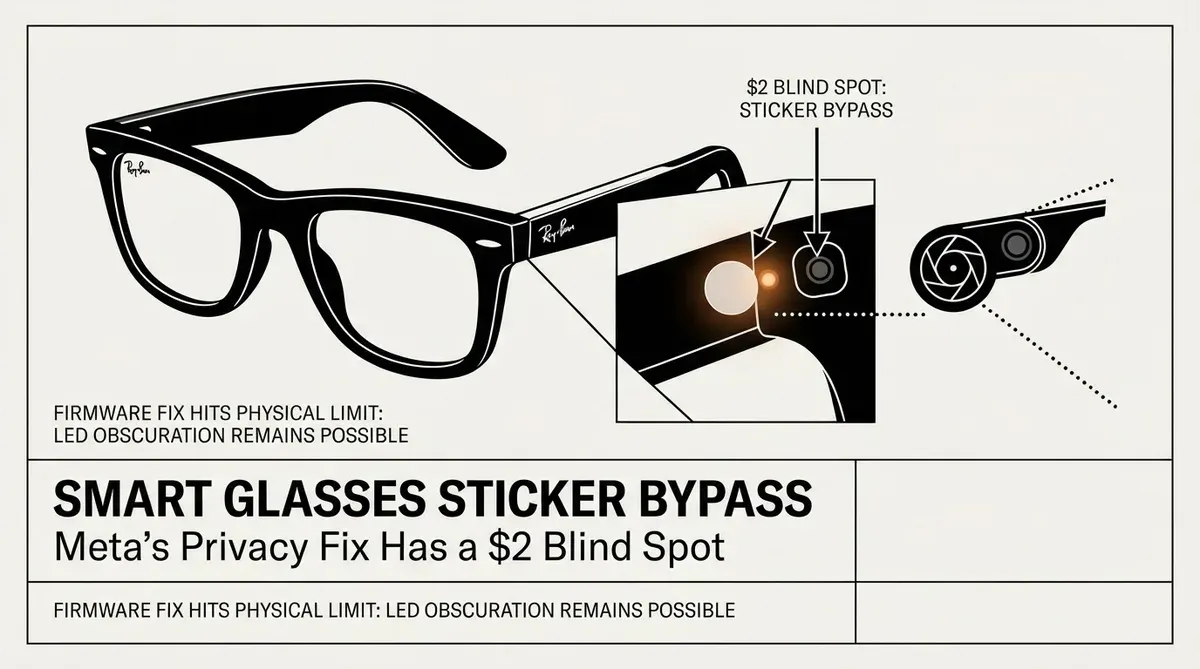
A smart glasses sticker bypass that costs about $2 has defeated Meta's anti-spy-cam fix for its Ray-Ban frames. The mandatory firmware update the company pushed in July 2026 disables the camera only when the recording LED is broken or fully covered. Hands-on testing shows a pinhole sticker hides the light from bystanders while the camera keeps recording, with no tamper warning triggered.
Meta shipped the change after reports that some owners had drilled out the capture LED to film unnoticed. The glasses already shut the camera off when the LED is covered; the update extends that behavior to interference and damage. Meta has defended the blinking indicator as an appropriate warning for nearby people, arguing that a camera-shutter sound loud enough to hear would not be practical for the product.
Why the Smart Glasses Sticker Bypass Works
The kits, often sold as privacy accessories, never damage the light. They leave the LED intact and only partly obscured, which avoids the full-coverage condition that would trip Meta's warning; notched plastic pieces keep the sensor convinced the indicator is still active. A dozen-piece kit sells for $16.99. In outdoor tests on second-generation frames, the recording light was undetectable.
Meta says it is exploring stronger tamper detection and will act against accounts that promote tampering services, and it has started taking down platform videos that show wearers harassing strangers in public. User reports are mixed on whether the update actually disables recording on hardware that was already modified.
The smart glasses sticker bypass exposes a structural limit in this approach: the update changes firmware, not physics. A recording LED is a visual signal, and any visual signal can be physically obscured. Software cannot verify what a bystander actually sees, so the safeguard rests on a light that a $2 purchase can defeat.
That limit matters more as the form factor spreads. Kmart's budget Anko camera glasses have sold out across Australia as privacy warnings spread. Reports that Meta hires moderators who review intimate video recorded on the frames have added to public concern. Cheaper devices put the same recording capability in more hands at lower price points.
With software protection dependent on hardware owners leaving the indicator alone, enforcement keeps shifting to regulators and the law. Meta has said it will block accounts promoting tampering services, and its platforms are already taking down videos of wearers harassing strangers. Until bystanders can verify recording state directly, those channels remain the only dependable backstop.
Why this matters
For people standing near a pair of camera glasses, the takeaway is that a lit indicator proves nothing: recording can continue with the LED hidden. With cheaper camera glasses reaching more buyers, that gap keeps widening, and privacy enforcement on wearables will keep falling to regulators and the law until recording state is verifiable by everyone nearby.
AI-generated image.
Related Articles
- Meta Smart Glasses Receive New AI-Powered Accessibility Features
- Meta Glasses Debut at $299 as Company Launches Own-Brand Wearable Line
- Weekly Tech Roundup: Apple's Big Week and AI's Price Tag
✔Human Verified
Researched and cross-referenced against primary sources by the Bytevyte editorial team. This article was generated with the assistance of artificial intelligence and reviewed by the Bytevyte editorial team.