
Stratos Project Controversy: Utah Data Center Faces Backlash Over 9GW Power and Water Demands
The Stratos Project controversy in Utah highlights the clash between 9GW AI data center demands and critical water shortages near the Great Salt Lake.
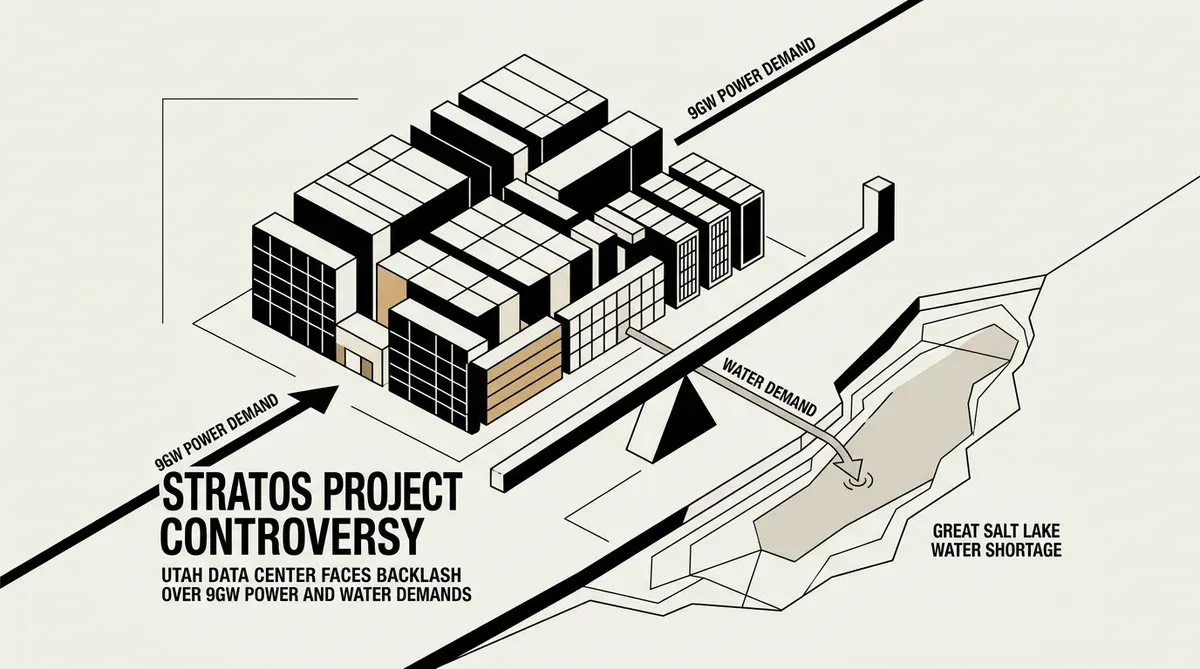
The Stratos Project, a massive 9-gigawatt data center proposed for Box Elder County, Utah, is the center of a significant environmental and regulatory debate over its potential impact on regional water supplies. Spanning 40,000 acres near the Great Salt Lake, the facility is a prime example of the growing tension between the infrastructure demands of artificial intelligence and the ecological limits of the American West. As of June 2026, the project faces nearly 4,000 formal protest letters from citizens and advocacy groups concerned about the Stratos Project controversy and its long-term effect on local resources.
Developers for the site are seeking rights to 13,000 acre-feet of water in the Hansel Valley to support cooling operations. This request comes at a time when two-thirds of planned data centers in the United States are slated for construction in drought-affected regions. Projections indicate that by 2028, these facilities will consume approximately 73 billion gallons of water annually. Large-scale operations like the one in Utah can require up to 5 million gallons of water every day, creating a direct conflict with agricultural and residential needs in arid climates.
Energy Demands and Carbon Implications
Beyond water consumption, the Stratos Project controversy extends to the facility's massive power requirements. Initial plans suggested the 9-gigawatt site would rely heavily on natural gas, a move that analysts estimate could increase Utah's total carbon emissions by 64%. This would result in roughly 35 million metric tons of annual carbon output, complicating state and federal climate goals. The scale of the power draw is unprecedented for a single commercial site, highlighting the immense energy appetite of next-generation AI training clusters.
Utah Governor Spencer Cox has intervened in the energy debate, stating this week that the project will not be permitted to run exclusively on natural gas. The governor is instead advocating for a diversified energy mix that includes nuclear, solar, and geothermal sources. This shift reflects a broader trend where state leaders are forcing tech developers to align infrastructure projects with long-term sustainability and grid stability requirements rather than relying on the fastest available fossil fuel solutions.
Strategic Risks for AI Infrastructure
The situation in Box Elder County is a warning for tech strategists and investors regarding the physical constraints of AI expansion. While the digital demand for compute is nearly infinite, the physical requirements for land, power, and water are finite and increasingly contested. The proximity of the Stratos site to the Great Salt Lake adds a layer of ecological risk, as further water diversion could accelerate the lake's decline and the subsequent release of toxic dust into the atmosphere. This environmental risk creates a high-stakes scenario for the developers and the state government.
For decision-makers, the Stratos Project controversy underscores the necessity of integrating environmental impact assessments into the earliest stages of site selection. Relying on traditional cooling methods or carbon-heavy energy sources in sensitive regions is becoming a significant regulatory and reputational liability. Future projects will likely require more advanced closed-loop cooling systems or locations in cooler, water-abundant climates to avoid the level of public and political resistance currently seen in Utah. The outcome of the Utah water rights filings will likely set a precedent for how other Western states handle similar mega-scale data center applications in the coming years.
While we strive for accuracy, bytevyte can make mistakes. Users are advised to verify all information independently. We accept no liability for errors or omissions.
AI-generated image.
Related Articles
- US Data Center Electricity Demand Rises as AI Infrastructure Spending Hits $725 Billion
- Hut 8 Secures $9.8 Billion Lease for Beacon Point AI Data Center Campus in Texas
- Utah State Board of Education Partners with Google for Statewide AI Deployment
✔Human Verified