
Perplexity Nvidia Vera CPU Use Signals Server Shift
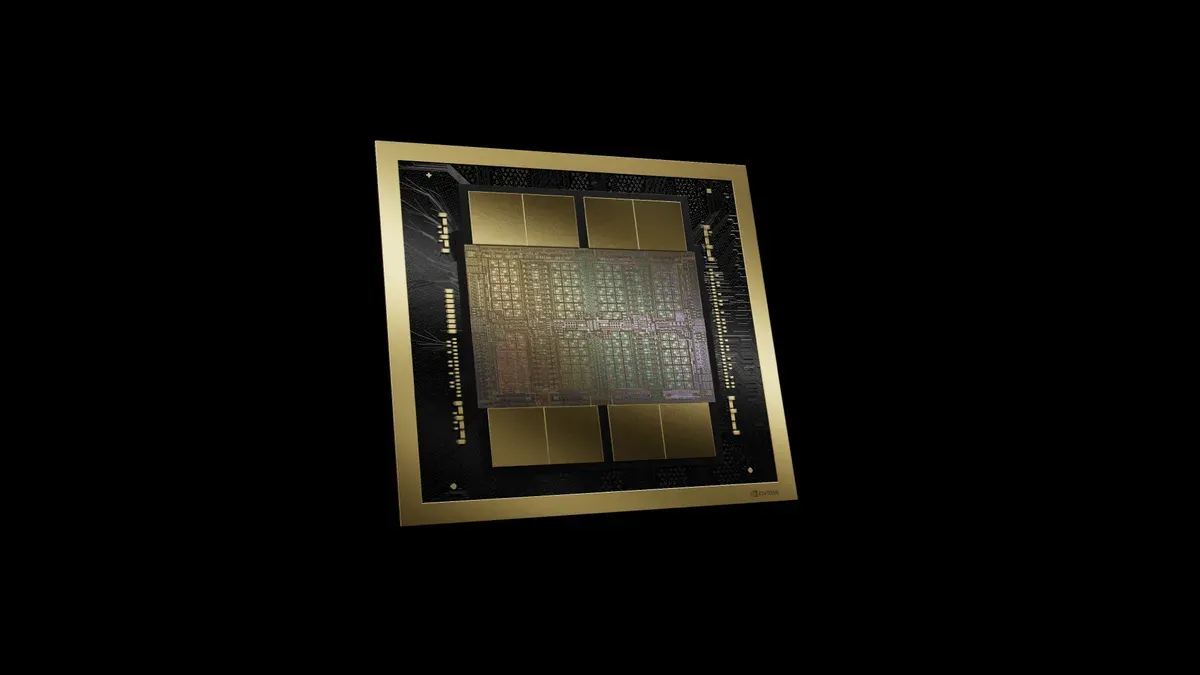
Perplexity's decision to run its AI agent workloads on the Nvidia Vera CPU is a genuine turning point for the server processor market. The AI search firm, which handles more than 400 million queries each month, is among the first major customers to commit to Nvidia's new general-purpose processor. Perplexity has committed to using Vera for its AI agent workloads, placing it alongside OpenAI and Anthropic as a notable early adopter of Nvidia's new CPU platform. This creates a critical mass of AI-native companies choosing Nvidia's custom Arm design over the x86 architectures from Intel and AMD that have dominated data centers for decades.
This is more than a single customer win for Nvidia. It validates a strategic thesis the chipmaker has been building for years. The workloads driving the next wave of computing — AI agents, autonomous coding, and real-time inference — demand a fundamentally different processor than what the incumbents have been selling. The Nvidia Vera CPU is the company's answer to that demand.
What Makes the Nvidia Vera CPU Different
Vera is the processor component of Nvidia's larger Vera Rubin platform, a complete system that pairs Nvidia's custom CPU with its next-generation accelerators. The chip uses Arm architecture, which has been steadily eroding Intel's x86 dominance in data centers over the past several years. But Vera is not simply a licensed Arm core. Nvidia built dozens of its own custom cores for the processor, optimizing them specifically for the kind of high-throughput, low-latency workloads that AI agents generate. The tight integration between Vera and Nvidia's accelerators, connected through a high-bandwidth link, means that data moves between CPU and GPU without the bottlenecks that plague traditional multi-chip server designs.
The performance numbers back up the architecture shift. Perplexity vice president Nate Kupp found that Vera processed agentic coding tasks roughly 1.5 times faster than traditional CPUs during internal testing. For a company processing hundreds of millions of queries each month, that throughput advantage translates directly into lower latency for users and lower total cost of ownership for infrastructure. When every millisecond of query latency affects user retention and every watt of power consumption affects the bottom line, a 50 percent performance improvement is not incremental. It is transformative.
The $200 Billion Prize
Nvidia's ambitions with Vera go far beyond winning individual AI search customers. The company is targeting the $200 billion general-purpose computing market, a space where Intel and AMD have enjoyed near-total dominance for decades. Nvidia projects that the Vera CPU alone will generate roughly $20 billion in revenue during the current fiscal year. If that forecast proves accurate, Vera would immediately rank among the highest-volume new processor lines in industry history, standing alongside established server CPU families from both Intel and AMD.
These projections deserve serious consideration given Nvidia's track record of delivering on its data center ambitions. The company's data center revenue has grown from roughly $15 billion in fiscal 2023 to well over $100 billion today, driven almost entirely by its GPU accelerators. Adding a CPU product line worth $20 billion would represent a further diversification and a direct challenge to Intel and AMD on their home turf.
The revenue potential also explains why Nvidia invested heavily in building its own custom Arm cores rather than licensing existing designs. A $20 billion revenue line justifies the enormous engineering investment required to design a competitive server processor from the ground up. It also gives Nvidia the scale to compete on pricing and supply, two areas where Intel and AMD have historically held advantages. The economics of the CPU business reward volume, and Nvidia is positioning itself to achieve that volume from day one.
The Counter-Argument
Intel and AMD are not standing still. AMD's EPYC processors have been gaining share in the data center, and Intel has responded with its own AI-focused Xeon variants. Both companies are also investing heavily in their own AI accelerator strategies. However, the fact that three of the most important AI companies — Perplexity, OpenAI, and Anthropic — have all independently chosen Vera for their agent workloads suggests that the x86 incumbents have a genuine architecture problem.
The issue is not raw compute performance. Intel and AMD processors are perfectly capable of running AI workloads. The issue is that agentic AI workloads have a different profile than traditional server tasks. They require tight coupling between CPU and accelerator, extremely low memory latency, and the ability to orchestrate complex multi-step workflows. Nvidia designed Vera specifically for this use case, with a high-bandwidth link to its own accelerators and a memory architecture optimized for the way AI agents move through inference and reasoning tasks.
Consider what an AI agent workload actually involves. A user issues a complex query to Perplexity, and the system must decompose that query into subtasks, retrieve information from multiple sources, run code to verify facts, synthesize results, and present a coherent answer. Each of these steps may require a different combination of CPU processing and accelerator inference. Traditional server architectures handle this by shuttling data between separate CPU and GPU memory pools over relatively slow interconnects. Vera eliminates that bottleneck by design, which is precisely why Perplexity saw a 1.5x speedup in agentic coding tasks.
This architectural advantage is not something Intel or AMD can fix with a software update or a microarchitecture refresh. It is a fundamental system-level design choice that requires Nvidia's level of vertical integration. Both Intel and AMD would need to redesign their entire platform architecture to achieve similar CPU-to-accelerator coupling, a multiyear effort that would require changes to chip design, socket architecture, memory hierarchy, and system software.
What This Means for Decision-Makers
For technology leaders planning infrastructure investments, the Perplexity-Vera deal carries a clear message. The era of treating CPU and GPU as separate procurement decisions is ending. Nvidia is building a unified compute platform where the CPU and accelerator are designed together, optimized together, and sold together. Companies that bet on the Nvidia Vera CPU are betting on a vertically integrated stack that promises higher performance for AI-specific workloads but also a greater lock-in to Nvidia's ecosystem.
The choice between Vera and traditional x86 processors will increasingly come down to workload profile. Companies running primarily conventional server tasks, such as databases, web serving, and enterprise applications, have little reason to switch. But organizations whose infrastructure is increasingly dominated by AI agents, coding assistants, and real-time inference will find that the Nvidia Vera CPU offers performance advantages that Intel and AMD simply cannot match with their current architectures. The 1.5x performance improvement that Perplexity observed in agentic coding tasks is not a marginal gain. It is the kind of difference that reshapes infrastructure economics at scale.
There is also a timing consideration. Nvidia projects the Vera CPU will generate $20 billion in revenue this fiscal year, which means the company is already ramping production to significant volumes. Unlike some previous Nvidia architecture transitions that started with limited availability, Vera appears to be planned for broad deployment from the outset. That should give potential adopters confidence about supply continuity and competitive pricing from the start.
Why This Matters
The most significant aspect of this development is not the performance numbers or the revenue projections. It is the signal that the center of gravity in data center computing is shifting. For two decades, Intel and AMD defined what a server processor was, and everyone else built software to fit. Nvidia is now defining a new kind of processor built for a new kind of workload, and the software — in the form of Perplexity, OpenAI, and Anthropic's agent systems — is being built to match. That is a structural change that will shape the infrastructure decisions of every AI-forward company for the next decade. The early adopters are making their bet on Vera, and the rest of the industry will be watching closely to see if it pays off.
Related Articles
- NVIDIA Ships First Vera CPUs to OpenAI and Anthropic for Agentic AI Workloads
- NVIDIA Vera CPU Launches as Standalone Product to Power AI Agent Infrastructure
- NVIDIA Vera Rubin Platform Powers New Dell Servers to Slash AI Costs
✔Human Verified
Researched and cross-referenced against primary sources by the Bytevyte editorial team.