
Nvidia Dismisses China AI Chip Plans Even as H200 Deliveries Land at ByteDance and Tencent
Nvidia denies a China AI chip roadmap even as H200 shipments reach ByteDance and Tencent, with Beijing's quota approvals now setting the pace of access.
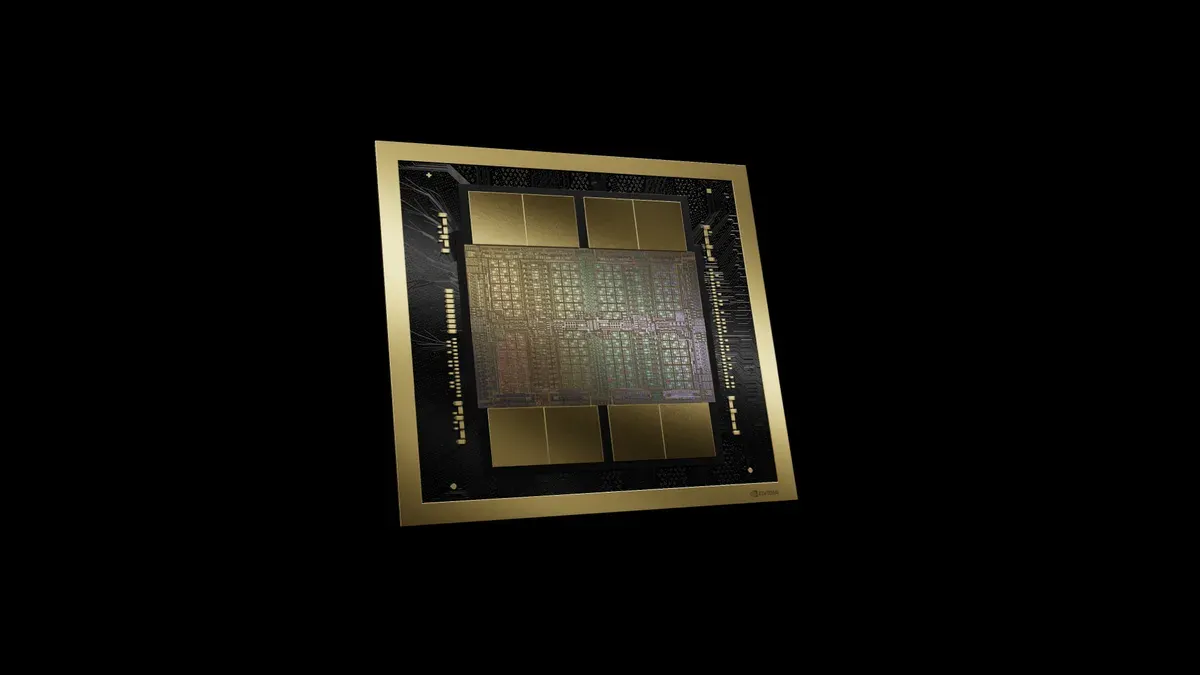
Nvidia has denied a report that it plans to begin shipping a China AI chip before the end of the year, a rebuttal that landed just as small batches of its H200 processors quietly reached ByteDance and Tencent. The company said Thursday that no China-specific version of the product is on its roadmap and that it has no sales of the language processing unit (LPU) in the Chinese market today. The exchange sums up Nvidia's position: approved by Washington to sell, constrained by Beijing on delivery, and facing a domestic rival, Huawei, that US export controls helped create.
The rejected account described an LPU, a chip class built to run trained models rather than train them, that would work alongside Nvidia's GPUs using inference acceleration technology licensed from Groq. Small-batch shipments were said to start before year-end and increase from there. Nvidia responded that the reporting was incorrect, that it has no LPU sales in China today, and that no China-specific LPU product is on its roadmap.
The timing sharpens the stakes. The denial became public in the same news cycle as the H200 deliveries, forcing Nvidia to reassure US officials about export compliance without closing the door on a market that once generated at least one-fifth of its data-center revenue.
The denial itself is precise about scope. Nvidia ruled out a China-specific LPU on its roadmap and any current LPU sales in China, but it did not rule out future products that meet export rules, and it did not address the H200 flow, which runs through a separate, case-by-case approval regime. The precision suggests the company is managing expectations rather than closing the China question.
The H200, one of Nvidia's most powerful AI accelerators, has been moving into mainland China in small deliveries over recent weeks. ByteDance and Tencent each took roughly 10,000 processors, and a few other Chinese technology groups could soon win approval for similar-sized shipments. Chinese regulators have also told companies they may ship H200s to Hong Kong and use them there. The allocations sit far below the 100,000-unit ceiling each company was cleared for, and every further tranche depends on a fresh decision.
The Hong Kong route is itself a compromise. Routing licensed hardware to the territory gives Chinese buyers access without flooding the mainland market that Beijing is reserving for domestic suppliers such as Huawei. The territory's limited data-center power means much of that hardware cannot run at full capacity, so the allocation is a hedge rather than a deployment plan.
The legal path opened on January 15, when a Bureau of Industry and Security rule moved the H200 from a default-denial export policy for China to case-by-case review. Washington cleared roughly ten companies, among them Alibaba, ByteDance, Tencent, JD.com, Lenovo, and Foxconn, to buy up to 100,000 H200s apiece. Approval did not translate into deliveries, because Beijing gates every order through the National Development and Reform Commission (NDRC) and wants most licensed hardware kept outside the mainland to protect domestic chipmakers. Lenovo told Chinese customers last week that orders for H200-containing products could resume, subject to NDRC sign-off.
The Numbers Behind the H200 Flow
The gap between licensed volume and delivered volume is the core of the story. Nvidia holds roughly 500,000 H200s in inventory, much of it built for Chinese customers, while the roughly 20,000 units that reached ByteDance and Tencent amount to about 2.5 percent of the 400,000-plus H200s the three largest buyers were collectively cleared to purchase in January. By late February Nvidia had still not sold the approved hardware, and in March it halted China-bound H200 output, redirecting that TSMC capacity to its Vera Rubin line. The stockpile carries a cost: every month it sits unsold, it occupies fab capacity Nvidia would rather apply to newer products.
| Measure | Figure |
|---|---|
| H200s each cleared Chinese buyer may import under US approval | Up to 100,000 |
| H200s approved collectively for ByteDance, Alibaba, and Tencent in January | 400,000+ |
| H200s delivered to ByteDance and Tencent in recent weeks | Roughly 10,000 each |
| Nvidia H200 inventory held mainly for Chinese customers | About 500,000 |
| China's historical share of Nvidia data-center revenue | At least one-fifth |
The China AI Chip Question Behind the Denial
China once accounted for at least one-fifth of Nvidia's data-center revenue, and Jensen Huang acknowledged in May that the company had largely conceded the Chinese AI market. Export controls did much of that work. Huawei and other domestic suppliers have strengthened their position, and the constrained environment made the economics of a China-specific product harder to justify.
The H200 trickle suggests how much Chinese demand remains. Chinese labs increasingly run inference workloads on domestic accelerators, but frontier model training still leans on Nvidia hardware; DeepSeek's failed attempts to train its R2 model on Huawei Ascend chips illustrate the gap. That is one reason Beijing appears willing to let limited volumes through even while steering the bulk of licensed units to Hong Kong.
Beijing's easing is targeted rather than general. It keeps the country's frontier labs supplied, protects Huawei's position in the mainland market, and makes the NDRC the arbiter of how much American hardware actually runs in China.
Seen as a market-power question, the standoff favors Beijing. Nvidia's inventory is a liability only China can absorb at meaningful margins, which gives the NDRC leverage in every approval decision. Huawei converts each delayed shipment into another round of domestic orders, and US policy provides no mechanism to accelerate the queue. The actor with the power to change the dynamic is Nvidia itself, through a product design that satisfies both export rules and Chinese demand, and that is the option the company has now ruled out, at least publicly.
The denial is easier to explain than the report. A China-specific LPU would commit Nvidia to a market whose rules can change with a shift in US policy, and it would draw engineering resources away from the Vera Rubin generation that anchors the company's growth case. A roadmap without a China AI chip keeps Nvidia's export-compliance argument clean, which matters to investors as much as to regulators.
None of this means the H200 flow points toward retreat. Every approved shipment converts idle inventory into revenue, and 500,000 units in stock have no alternative buyer at comparable margins. Each tranche that clears also turns a frozen asset into cash without disturbing the Vera Rubin ramp, since the March production halt already shifted that capacity to newer parts. The practical question is whether Beijing permits sales at a scale that matters, one NDRC approval at a time, and whether Alibaba and the remaining cleared buyers receive similar allocations in the coming months.
For Chinese buyers, the constraint cuts both ways. ByteDance and Tencent get enough H200s to keep frontier work moving but not enough to build at the pace their AI ambitions require. The shortfall is Huawei's opening, and the NDRC's measured release of inventory is how Beijing manages that dependence without surrendering its industrial policy. If the denial holds and no China AI chip materializes, Huawei stands to gain the most from the continued shortage.
Why This Matters
US policy opened the door to H200 exports, but Beijing controls the valve. Washington's case-by-case review sets the ceiling on what may be sold; the NDRC's approval queue decides what actually ships, a division of power that leaves Nvidia's China revenue dependent on two governments with opposite interests. For buyers, the current trickle is a bridge that keeps frontier training alive without restoring pre-2026 supply levels, and the report-and-denial cycle leaves Nvidia's China options deliberately open in a market it has largely conceded.
Related Articles
- NVIDIA H200 China Sales Hit Zero as Beijing Blocks Domestic Tech Giants from U.S. Chips
- U.S. Restricts AI Hardware Shipments to Malaysia to Block NVIDIA Chip Loophole
- AI Business Weekly Roundup: $250B Guarantees, Model Race, New Rules
✔Human Verified
Researched and cross-referenced against primary sources by the Bytevyte editorial team. This article was generated with the assistance of artificial intelligence and reviewed by the Bytevyte editorial team.