
NVIDIA H200 China Sales Hit Zero as Beijing Blocks Domestic Tech Giants from U.S. Chips
NVIDIA H200 China sales hit zero as Beijing blocks domestic firms like Alibaba and Tencent from buying U.S. AI chips amid security and tax concerns.
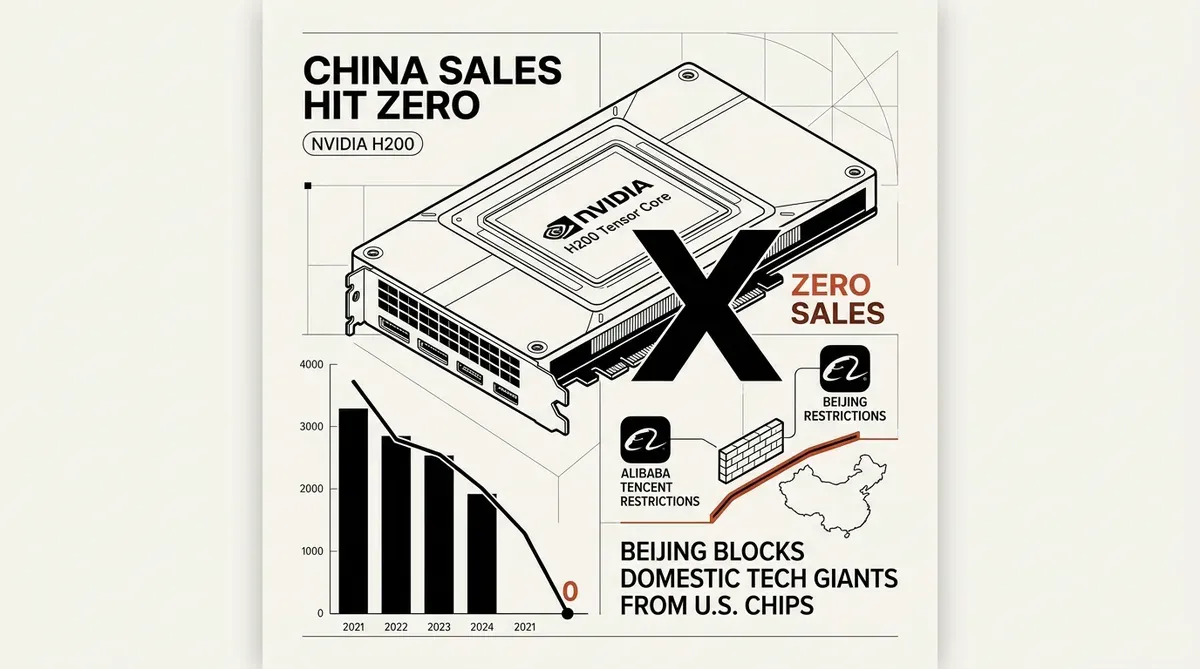
NVIDIA has reached a critical impasse in its efforts to supply advanced artificial intelligence hardware to the Chinese market, with zero deliveries of its H200 chips recorded despite receiving U.S. export clearance. The NVIDIA H200 China sales deadlock comes as the Chinese government reportedly blocks its own domestic technology giants from finalizing purchases. This standoff places a projected $50 billion market opportunity at risk for the 2026 fiscal year, forcing a significant shift in the global semiconductor trade dynamic.
U.S. Commerce Secretary Howard Lutnick confirmed this week that no transactions for the high-end processors have materialized. While the Trump administration provided conditional approval for sales in January 2026, Beijing has not granted the necessary purchasing permissions to firms like Alibaba, Tencent, ByteDance, and JD.com. Each of these companies had been cleared by U.S. regulators to acquire up to 75,000 units of the H200 hardware, but the orders remain unfulfilled.
Strategic Obstacles and the Trump Tax
The stalled NVIDIA H200 China sales are complicated by a unique trade framework known as the Trump Tax. This arrangement requires 25% of all revenue from these semiconductor sales to be paid directly to the U.S. government. Beyond the financial burden, Beijing has raised significant security concerns regarding the physical logistics of the supply chain. Because the chips are required to pass through U.S. territory for specific processing stages, Chinese officials have expressed fears regarding potential hardware tampering or the integration of backdoors before the silicon reaches domestic data centers.
NVIDIA CEO Jensen Huang recently traveled to Beijing as part of a diplomatic delegation to resolve the delivery deadlock. During the visit, Huang acknowledged that the company has largely conceded a portion of the market to local competitors. The vacuum left by the absence of NVIDIA hardware is being filled by Huawei and its Ascend series of AI processors. Chinese firms are also turning to DeepSeek for optimized software stacks that can extract higher performance from domestic hardware, reducing the reliance on American technology.
Market Implications and Domestic Pivot
The impact on NVIDIA's revenue structure is substantial. The China segment, which previously accounted for 20% to 25% of the company's data center earnings, is facing a potential total washout for the current cycle. While global demand for data center processors reached record levels in the first quarter of 2026, the inability to convert the Chinese pipeline into actual shipments creates a localized revenue gap that domestic manufacturers are eager to exploit.
China is prioritizing semiconductor self-reliance to bypass the strict usage monitoring requirements imposed by the U.S. government. By building a domestic ecosystem around the Huawei Ascend platform, Beijing aims to insulate its AI development from external export controls. For NVIDIA, the challenge remains whether the H200 will ever enter the region in meaningful volumes or if the current stalemate is a permanent realignment of the AI infrastructure market.
While we strive for accuracy, bytevyte can make mistakes. Users are advised to verify all information independently. We accept no liability for errors or omissions.
AI-generated image.
Related Articles
- China Blocks Meta's Manus Acquisition Over National Security Concerns
- ByteDance AI Infrastructure Budget Hits $30 Billion for 2026
- Sharon AI Asia-Pacific Expansion Secured Through $950 Million Cloud Infrastructure Deal
✔Human Verified