
Uber Cuts HR Staff by 23 Percent Amid Operational Efficiency Drive
Uber reduces its People division by 23% and implements new financial controls on agentic AI spending to improve operational efficiency and manage costs.
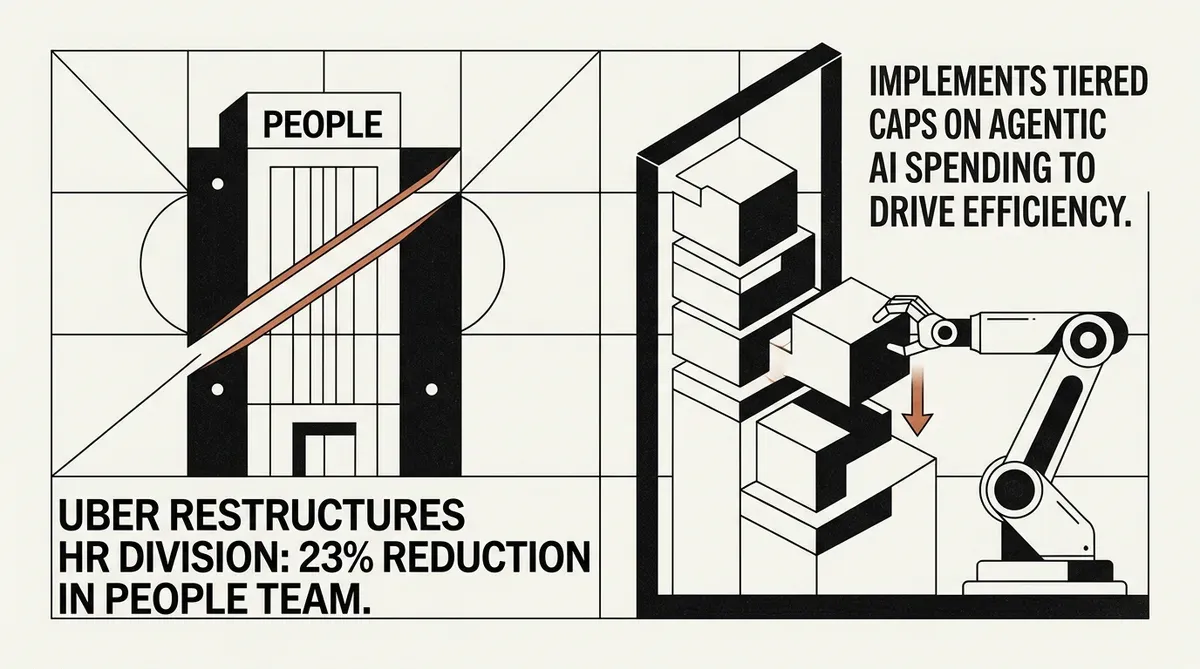
Uber is reducing its People division by 23 percent as part of a broader restructuring effort. According to a company announcement, the layoffs affect approximately 200 employees within the human resources and recruitment teams. This reduction represents less than 1 percent of the company's total global workforce of 34,000 people.
The changes follow a directive from Jill Hazelbaker, the company's president of marketing, communications, and public policy. According to an internal memo from CEO Dara Khosrowshahi, the adjustments are intended to improve the effectiveness of the People team. The company is moving away from the high-growth hiring phases that characterized its earlier years. Uber is now focusing on maintaining a leaner internal management structure.
Context of the HR Restructuring
The layoffs primarily target the recruitment department. This decision follows a period where Uber slowed its hiring rate to manage costs. According to company filings, the ride-hailing firm is prioritizing bottom-line stability. The restructuring is a response to the need for fiscal discipline in the technology sector. While the company continues to invest in technology, it is streamlining administrative functions to ensure long-term performance.
Monitoring Agentic AI Spending
As Uber optimizes its workforce, the company is also evaluating its agentic AI spending. These autonomous software tools perform tasks with minimal human intervention. According to industry reports, Uber is implementing financial controls to manage the costs of these computational resources. The company is using a tiered system to monitor how employees use AI tools. This approach ensures that agentic AI spending is tied to specific productivity outcomes rather than remaining an unrestricted expense.
The focus on agentic AI spending reflects a trend where tech firms automate routine tasks while controlling the high costs of AI infrastructure. Uber is positioning itself to handle platform growth without aggressive headcount expansion. According to analysts, the transition to a model supported by efficient AI tools is a sign of corporate maturity. The company remains committed to a high-performance organizational structure as it approaches its 2026 financial targets.
While we strive for accuracy, bytevyte can make mistakes. Users are advised to verify all information independently. We accept no liability for errors or omissions.
AI-generated image.
Related Articles
- Rising Enterprise AI Spending Forces Strategy Shift at Microsoft and Uber
- Cloudflare and Upwork Cut Staff to Accelerate Pivot Toward Agentic AI Models
- ClickUp Cuts 22% of Staff to Pivot Toward 100x Efficiency with 3,000 Internal AI Agents
✔Human Verified