
Memory Chip Crisis Drives Apple and Microsoft to Raise Prices Up to $300
The memory chip crisis has pushed Apple and Microsoft to raise prices up to $300 on Macs, iPads, and Xbox consoles as AI demand consumes 70% of global chip supply.
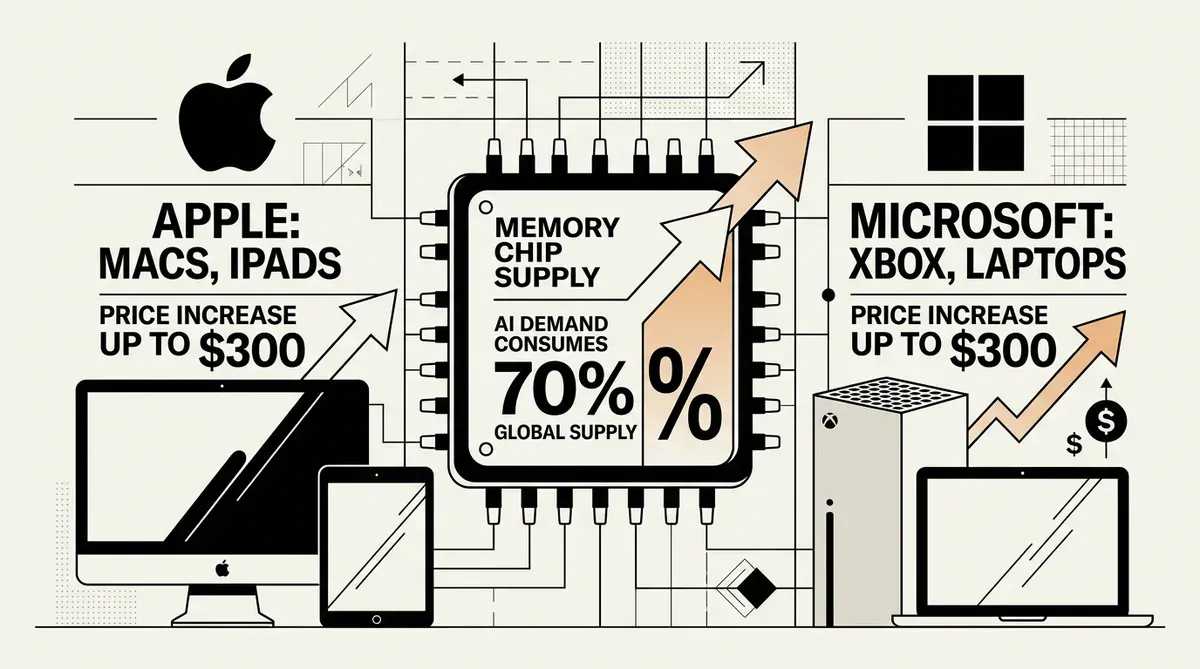
Apple and Microsoft raised prices on Macs, iPads, and Xbox consoles on June 25, with some models climbing more than $300. The increases are a direct result of a memory chip crisis that has driven DDR5 memory costs up more than 400 percent over the past year.
Apple adjusted prices across its Mac and iPad lineup. The base MacBook Air went from $1,099 to $1,299, while the entry-level MacBook Pro jumped from $1,699 to $1,999. The iPad Pro now starts at $1,199, up from $999, and the Mac Studio M3 Ultra saw the biggest single increase, rising from $3,999 to $5,299. Microsoft followed with price increases on Xbox consoles, though exact amounts were not specified. Sony had raised PlayStation 5 prices by up to $150 in March, signaling that the trend extends across the entire gaming industry.
| Product | Previous Price | New Price | Increase |
|---|---|---|---|
| MacBook Air (base) | $1,099 | $1,299 | $200 |
| MacBook Pro (base) | $1,699 | $1,999 | $300 |
| iPad Pro (base) | $999 | $1,199 | $200 |
| Mac Studio M3 Ultra | $3,999 | $5,299 | $1,300 |
Taken together, the moves from Apple, Microsoft, and Sony mean that every major consumer hardware category, including laptops, tablets, and game consoles, has been repriced within a three-month span. The synchronization reflects a market where rising memory costs affect all manufacturers equally, leaving no single company able to absorb the difference.
Why the Memory Chip Crisis Is Worsening
The root cause of the memory chip crisis lies in a dramatic reallocation of global chip supply. Roughly 70 percent of the world's memory production now goes to AI data centers, leaving consumer electronics makers to compete for what remains. DDR5 chips, the standard memory used in PCs and laptops, have quadrupled in price over twelve months as hyperscale cloud providers race to expand AI infrastructure.
Samsung has announced plans for a $651 billion investment package over the next decade to boost production capacity. Even that record spending will take years to translate into greater availability. Micron CEO Sanjay Mehrotra said that chip availability may improve by 2028, but that no clear timeline exists for when supply will meet demand.
How Consumers Are Affected
The memory chip crisis does not end with the products already adjusted. Analysts expect the iPhone to be next in line for a price increase, since it relies on the same constrained memory components. Consumer device prices may continue rising at more moderate rates as manufacturers attempt to protect margins.
The pattern is clear: the AI boom is creating downstream costs for everyday technology buyers. Each new data center buildout consumes additional memory chips, shrinking the pool available for consumer hardware. With supply constraints projected to last into 2028, the memory chip crisis is a structural shift in what consumers can expect to pay for laptops, tablets, and gaming consoles.
AI-generated image.
Related Articles
- AI Infrastructure Boom Triggers Massive Global Shortage of Memory Chips
- AI Memory Shortages Drive Long-Term Supply Deals and Surge in Laptop Costs
- Samsung Strike Threat Drives 20% Surge in Memory Spot Prices
✔Human Verified
Researched and cross-referenced against primary sources by the Bytevyte editorial team.